Love this? Pin it for later! 📌
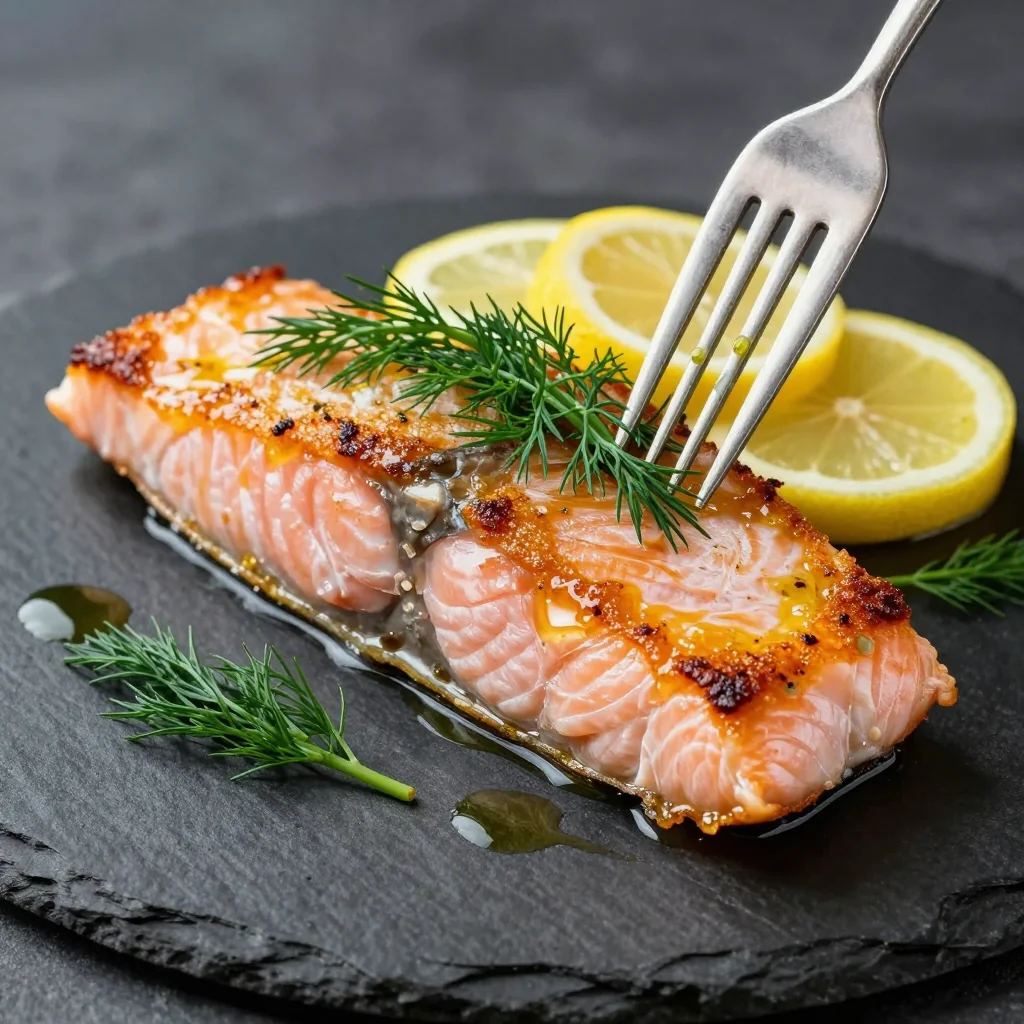
There’s something undeniably elegant about a side of salmon emerging from the oven, its surface blistered and bronzed, the scent of lemon zest and fresh dill curling through the air like an invitation to celebrate. The first time I served this Showstopper Baked Salmon with Dill and Lemon at a dinner party, conversation stopped mid-sentence. Forks hovered. Someone actually gasped. And then—because good food should always be followed by comfortable silence—everyone chewed, nodded, and reached for seconds before the first round of praise tumbled out.
I’ve since made this salmon for bridal brunches, holiday tables, and the kind of Tuesday nights that deserve a little sparkle. It’s my go-to when I want to look like I tried harder than I actually did, because the truth is: the oven does 90 % of the work while I sip something chilled and mingle. The fillet bastes itself in a glossy emulsion of citrus, garlic, and olive oil; the dill perfumes every bite; and the flesh stays lusciously coral and moist right up to the moment you flake it onto a waiting plate. If you can hold a whisk and set a timer, you can master this dish—and you’ll feel like a culinary rock star doing it.
Why This Recipe Works
- One-pan wonder: Everything roasts on a single sheet, meaning fewer dishes and more time with guests.
- Flavor-build in stages: A quick 15-minute marinade infuses the fish, while a final broil creates that restaurant-quality crust.
- Fail-proof temperature: Baking low and slow, then finishing with high heat, guarantees silky centers without over-cooking.
- Scalable for crowds: The technique works for a 1-pound fillet or a 3-pound side—perfect for potlucks.
- Fresh herb magic: Dill and lemon zest bloom in the oven, creating an aroma that tastes like spring—no matter the season.
- Butter-kissed glaze: A final brush of melted butter mixed with pan juices turns the top glossy and irresistible.
Ingredients You’ll Need
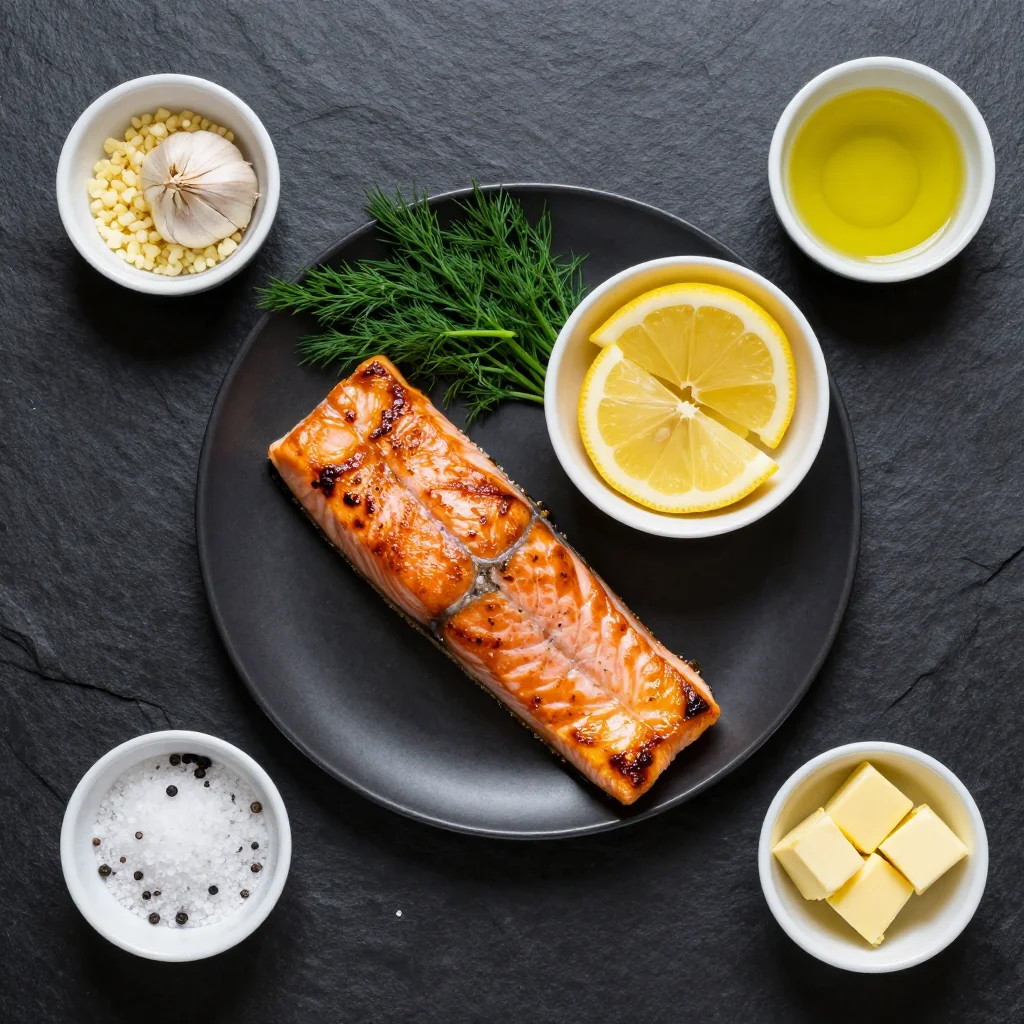
The ingredient list is short, but each item pulls serious weight. Start with the best salmon you can find—wild-caught Coho or King if your budget allows, but even responsibly farmed Atlantic will shine here. Look for fillets that are firm, translucent, and smell like the ocean on a good day, not the tuna aisle on a bad one.
Salmon: A center-cut side (roughly 2 lb / 900 g) cooks evenly and plates beautifully. Leave the skin on; it acts as a built-in heat shield and crisps up for those who love a crunchy nibble.
Dill: Fresh dill fronds are non-negotiable. The feathery herb has a bright, grassy note that dried dill simply can’t replicate. Buy a big bunch; any leftover stems can be tucked into a jar of pickled vegetables or whirred into yogurt for tomorrow’s lunch.
Lemon: One large organic lemon gives you zest for the marinade, wheels for roasting, and a final squeeze at the table. Organic matters when you’re zesting—nobody wants a mouthful of wax or pesticides.
Garlic: Just two cloves, micro-planed so they melt into the oil and don’t scorch under the broiler.
Extra-virgin olive oil: A fruit-forward, peppery oil stands up to the fish’s richness. If you’re feeling fancy, swap half with melted ghee for a nuttier finish.
Sea salt & freshly ground pepper: Kosher salt dissolves quickly; cracked pepper adds floral bite.
Honey: A teaspoon encourages caramelization without overt sweetness. Maple syrup works in a pinch.
Butter: European-style, 82 % fat butter yields the silkiest pan sauce. Dairy-free? Use an equal amount of additional olive oil.
How to Make Showstopper Baked Salmon with Dill and Lemon
Pat & position
Remove salmon from the refrigerator 15 minutes before cooking. Blot both sides with paper towels—moisture is the enemy of browning. Line a rimmed baking sheet with parchment for easy cleanup, or use a large cast-iron griddle if you want serious sizzle.
Whisk the marinade
In a small bowl, combine 3 Tbsp olive oil, zest of 1 lemon, 2 Tbsp fresh lemon juice, 1 tsp honey, 1 tsp kosher salt, ½ tsp pepper, and the micro-planed garlic. Whisk until the honey dissolves and the mixture looks like liquid sunshine.
Marinate briefly
Place the salmon skin-side down on the prepared sheet. Spoon two-thirds of the marinade over the flesh, spreading to the edges. Lay thin lemon wheels down the center and tuck dill sprigs underneath and on top. Let stand at room temperature for 15 minutes—long enough for the seasoning to penetrate, short enough to stay food-safe.
Preheat smart
Set the oven to 275 °F (135 °C). This gentle heat allows the interior to climb slowly, preventing the white albumin from seeping out. Position rack in the lower third so the top doesn’t overcook during the final broil.
Bake low & slow
Slide the sheet into the oven and bake 18–22 minutes, depending on thickness. A digital probe inserted into the thickest portion should read 120 °F (49 °C) for medium-rare. The fish will appear slightly translucent in the center—carry-over cooking is your friend.
Broil for show
Remove the pan, increase oven to broil (or 500 °F if your oven doesn’t have a separate broil setting). Brush the remaining marinade across the top, then dot with 2 Tbsp cold butter cut into cubes. Return to the oven for 2–3 minutes, rotating once, until the surface is bronzed and bubbling.
Rest & glaze
Transfer the salmon to a platter and tent loosely with foil. Rest 5 minutes so juices can reabsorb. Meanwhile, whisk 1 Tbsp chopped dill and a squeeze of lemon into the pan juices; drizzle this glossy elixir back over the fish just before serving.
Serve with flair
Garnish with additional dill fronds, edible flower petals, or a shower of chive blossoms. Present the side whole at the table for maximum drama, then use a fish spatula to break it into restaurant-worthy portions.
Expert Tips
Use a probe thermometer
Fish continues cooking after it leaves the oven. Pull at 120 °F for medium-rare, 130 °F for medium.
Dry = crispy
Blotting the surface with paper towels removes excess moisture, ensuring a lacquered finish under the broiler.
Don’t over-marinate
Acid in the lemon juice will start to cure the fish after 30 minutes, so keep the window short.
Cold butter trick
Dotting cold butter on top before broiling creates rapid steam pockets, basting the fish and promoting even browning.
Rotate for even color
Most home ovens have hot spots. Give the pan a 180-degree turn halfway through broiling for uniform bronzing.
Slice against the grain
Cut portions perpendicular to the white fat lines for the most tender bite.
Variations to Try
- Mediterranean twist: Swap dill for oregano and basil, add halved cherry tomatoes and olives to the pan.
- Asian-inspired: Replace lemon with lime, use cilantro and mint, and whisk 1 tsp soy sauce + 1 tsp sesame oil into the marinade.
- Spicy kick: Stir ½ tsp red-pepper flakes or 1 tsp harissa paste into the oil mixture.
- Maple-mustard: Sub honey with maple and whisk in 1 Tbsp whole-grain Dijon for a sweet-sharp crust.
- Smoky tea cure: Add 1 tsp loose Earl Grey to the salt; the tannic smoke echoes the dill beautifully.
Storage Tips
Refrigerate: Cool leftovers completely, then store in an airtight container up to 3 days. For best texture, reheat gently: place fillet in a skillet with a splash of water, cover, and warm over medium-low until just heated through, 4–5 minutes.
Freeze: Wrap individual portions tightly in parchment, then foil, then place in a zip-top bag. Freeze up to 2 months. Thaw overnight in the refrigerator and use in salads or salmon cakes where flaking is welcome.
Make-ahead: The marinade can be whisked and refrigerated up to 5 days. Pat fish dry and marinate just before cooking for optimal texture.
Frequently Asked Questions
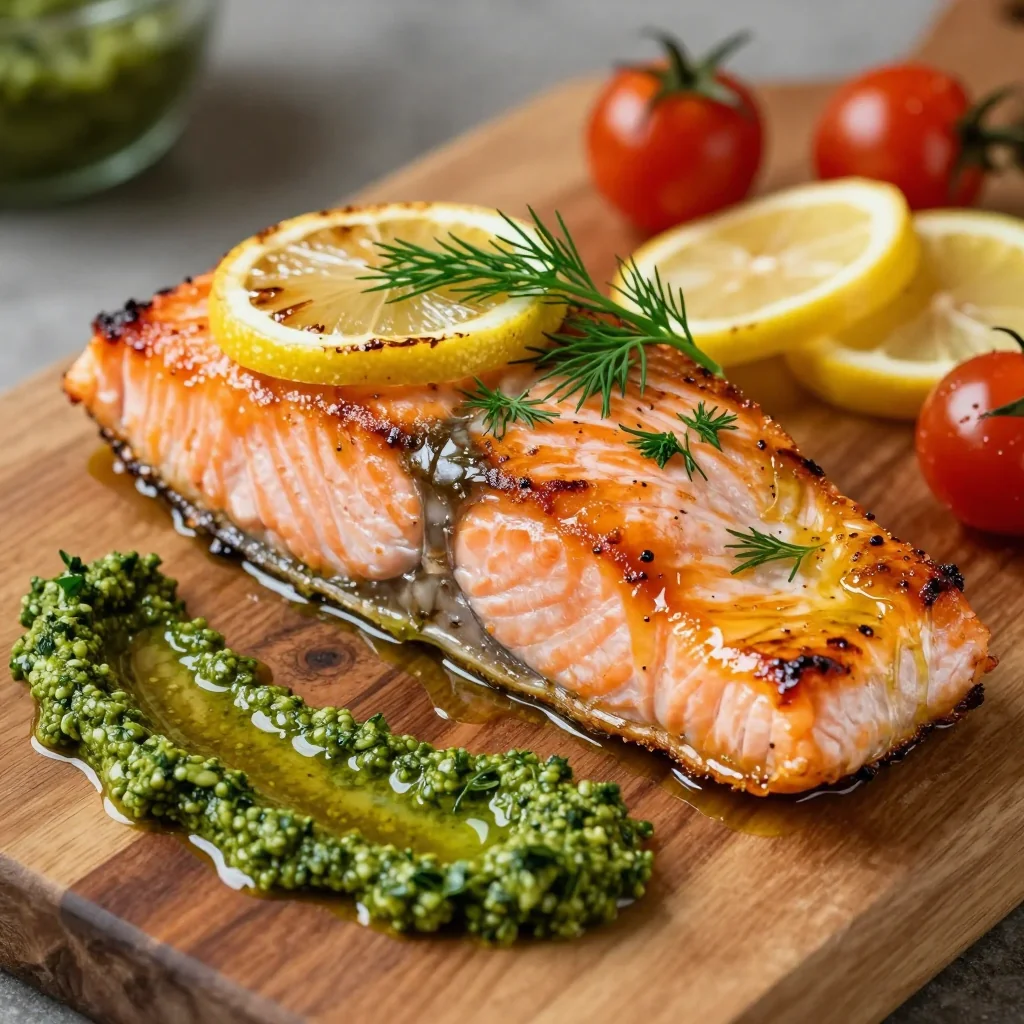
Showstopper Baked Salmon with Dill and Lemon
Ingredients
Instructions
- Prepare: Pat salmon dry and place skin-side down on a parchment-lined rimmed baking sheet. Let stand 15 minutes to come to room temperature.
- Marinade: Whisk olive oil, lemon zest, lemon juice, honey, garlic, salt, and pepper until emulsified. Spoon two-thirds over the salmon; top with lemon wheels and dill sprigs. Marinate 15 minutes.
- Bake: Preheat oven to 275 °F (135 °C). Bake salmon on lower rack 18–22 minutes, until probe reads 120 °F for medium-rare.
- Broil: Remove, increase oven to broil. Dot salmon with cold butter cubes; broil 2–3 minutes until bronzed and glossy.
- Rest & serve: Tent loosely with foil 5 minutes. Whisk pan juices with chopped dill; drizzle over fish. Garnish and serve.
Recipe Notes
For even cooking, choose a center-cut side of uniform thickness. If your fillet tapers, fold the thin tail end underneath itself and secure with a toothpick.