Picture this: I’m standing in a cramped apartment kitchen, a burnt batch of garlic bread still smoldering on the counter, and a friend drops a dare like a hot potato—“Make the best roasted veggies you’ve ever had.” I scooped the ingredients from my pantry, tossed them into a bowl, and the kitchen was suddenly alive with the scent of caramelized onions and the glossy sheen of balsamic vinegar. The moment the tray hit the oven, the air filled with a sweet, smoky aroma that felt like a promise of comfort. I’ve always thought roasted vegetables were just a side dish, but that night, the dish became the headline, the star of the meal, and the conversation starter at dinner. I was stunned—what if this simple tweak could turn an ordinary side into an unforgettable experience? That’s the spark that started this recipe, and I can’t wait to share every detail with you.
I was skeptical at first. I’ve tried countless variations—roasted with garlic, with lemon zest, with a drizzle of soy sauce—but none of them felt complete. Then I found the secret: a balsamic glaze that thickens into a syrupy coating, clinging to each vegetable like a velvet glove. The glaze caramelizes, giving the veggies a sweet, tangy finish that cuts through the earthiness of the Brussels sprouts and the mild sweetness of the carrots. The moment the glaze starts to bubble, the kitchen feels like a small, fragrant laboratory where flavors are experimenting and evolving. If you’re a fan of bold, layered flavors, this is the dish that will redefine your perception of roasted vegetables.
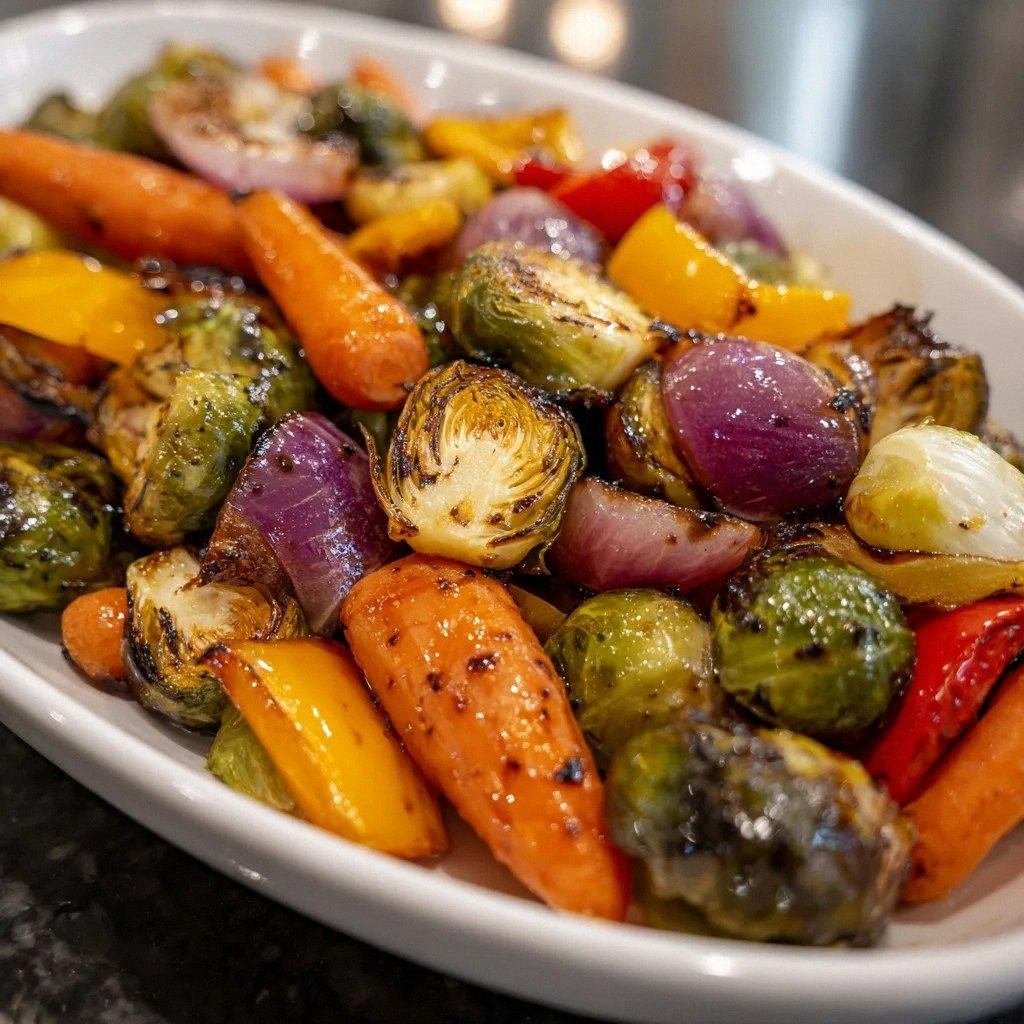
What makes this version stand out isn’t just the glaze. It’s the balance of textures—crisp edges that crackle when you bite, tender cores that melt in your mouth, and a glossy finish that glistens like a polished trophy. The use of honey or maple syrup introduces a subtle caramel undertone that enhances the balsamic’s acidity, creating a harmonious dance of sweet and savory. The vegetables are cut to uniform size, ensuring even roasting and a consistent flavor profile. I dare you to taste this and not go back for seconds. The dish is so good that even my picky friend, who usually turns away from vegetables, couldn’t resist a second helping.
Most recipes get this completely wrong, focusing either on overcooking the veggies or under-seasoning the glaze. I’ve spent years experimenting with different vinegar ratios and sugar levels, and I’ve discovered that a 1:1 ratio of balsamic to honey yields the perfect balance. The trick is to let the glaze reduce slowly, not rush it, so it thickens without burning. Picture yourself pulling this out of the oven, the whole kitchen smelling incredible, and your guests already reaching for their forks. If you’ve ever struggled with roasted vegetables that turn out soggy or bland, you’re not alone—this is the fix you’ve been searching for. Let me walk you through every single step—by the end, you’ll wonder how you ever made it any other way.
What Makes This Version Stand Out
- Taste: The balsamic glaze turns simple veggies into a flavor explosion, pairing sweet, tangy, and umami notes in perfect harmony.
- Texture: Crispy, caramelized edges contrast with tender, juicy interiors, creating a satisfying bite that shatters like thin ice.
- Visual Appeal: The glossy sheen of the glaze gives the dish a restaurant‑quality finish that’s Instagram‑ready.
- Ingredient Quality: Using fresh, high‑quality produce and aged balsamic vinegar elevates the dish beyond the average side.
- Ease of Prep: The recipe requires minimal prep time—just a quick chop and toss—yet delivers maximum flavor.
- Versatility: It works as a side, a main, or a topping for salads, grain bowls, and even pizza.
- Make‑Ahead Potential: The glaze can be prepared in advance, and the veggies roast to perfection even after refrigeration.
- Guest Reaction: Even the most skeptical palates are won over, making it ideal for dinner parties and family meals.
Alright, let’s break down exactly what goes into this masterpiece…
Inside the Ingredient List
The Flavor Base
Balsamic vinegar is the star of this dish, providing a deep, fruity acidity that caramelizes into a glossy glaze. The vinegar’s natural sugars caramelize during roasting, creating a sweet undertone that balances the vegetables’ earthiness. If you skip the vinegar, the dish loses its signature tang and depth. For a more robust flavor, choose a high‑quality aged balsamic; the richer the vinegar, the more complex the glaze.
The Texture Crew
Brussels sprouts, carrots, bell peppers, and red onion each bring distinct textures that complement one another. Brussels sprouts add a peppery bite and a firm crunch; carrots contribute a subtle sweetness and a satisfying snap; bell peppers bring juicy bursts of flavor and a vibrant crunch; red onion offers a mild, caramelized sweetness that ties everything together. Cutting them into uniform sizes ensures even roasting, preventing some pieces from burning while others remain raw.
The Unexpected Star
Honey or maple syrup may seem ordinary, but they’re crucial for balancing the acidity of the balsamic. The natural sugars in honey caramelize beautifully, giving the glaze a rich, buttery finish. If you’re vegan or simply prefer a lighter touch, maple syrup provides a comparable sweetness without the bee‑made flavor. Skipping the sweetener will leave the glaze too sharp, and the veggies may taste like they’re missing a layer of depth.
The Final Flourish
Olive oil is the medium that carries the glaze to the vegetables, ensuring even caramelization. It also adds a subtle fruity note that complements the balsamic’s depth. Salt and pepper are essential for enhancing every flavor profile; a pinch of salt can make the sweet glaze pop, while pepper adds a mild heat that wakes up the palate. If you prefer a smoky twist, sprinkle a pinch of smoked paprika before roasting.
Everything's prepped? Good. Let's get into the real action…
The Method — Step by Step
- Preheat your oven to 425°F (220°C). Line a large baking sheet with parchment paper to prevent sticking. Spread the vegetables out in a single layer, ensuring they’re not crowded; overcrowding leads to steaming instead of roasting. The oven should be hot enough that the veggies begin to sizzle as soon as they hit the sheet. This is the moment of truth—watch the edges start to brown.
- In a small bowl, whisk together 1/4 cup balsamic vinegar, 2 tablespoons honey (or maple syrup), 2 tablespoons olive oil, 1 teaspoon salt, and 1/2 teaspoon freshly ground black pepper. The mixture should be glossy and slightly thick. This glaze will coat each vegetable, turning them into caramelized jewels. If you like a touch of heat, add a pinch of crushed red pepper flakes.
- Drizzle the glaze over the vegetables, tossing gently to ensure even coverage. The glaze should cling to every bite, creating a glossy sheen that’s impossible to resist. If you’re using a spray bottle, a light mist will also work—just be careful not to over‑coat, or the veggies will become soggy.
- Place the baking sheet in the preheated oven and roast for 20 minutes. After 10 minutes, stir the vegetables to promote even browning. The carrots should begin to soften, and the bell peppers should develop a slight char on the edges. The glaze will thicken as it reduces, turning into a syrupy coating.
- Continue roasting for another 10 minutes, or until the vegetables are tender and the glaze has caramelized into a glossy finish. The Brussels sprouts should be golden brown on the edges, with a slight crispness. The carrots should be tender yet still hold their shape. The bell peppers should have a slight smoky flavor.
- Remove the sheet from the oven and let the vegetables rest for 5 minutes. This rest period allows the glaze to set, ensuring each bite stays glossy and flavorful. If you’re plating immediately, drizzle a splash of extra balsamic over the top for an extra burst of acidity.
- Optional: Sprinkle freshly chopped parsley or basil over the top for a burst of color and herbal freshness. The herbs add a bright contrast to the deep, caramelized glaze. If you prefer a nutty crunch, top with toasted pine nuts or slivered almonds.
- Serve hot, straight from the oven, with a side of crusty bread or a protein of your choice. Pair with a glass of chilled white wine for an elevated dining experience. This dish is versatile enough to be a main or a side, depending on your appetite.
That's it— you did it. But hold on, I've got a few more tricks that'll take this to another level. These insider tips will help you master the glaze, keep the veggies crisp, and elevate the overall flavor profile.
Insider Tricks for Flawless Results
The Temperature Rule Nobody Follows
Many cooks roast at 375°F, but that low temperature can cause vegetables to steam rather than caramelize. I’ve found that 425°F (220°C) is the sweet spot—hot enough to brown the edges, but not so hot that the glaze burns before the veggies finish roasting. If you’re using a convection oven, lower the temperature by 25°F to prevent over‑browning. The key is to maintain a steady, high heat that encourages a crisp exterior.
Why Your Nose Knows Best
The aroma of caramelizing vegetables is a powerful indicator of progress. When you smell a sweet, nutty scent with a hint of vinegar, you know the glaze is thickening properly. If the smell is more vinegar‑heavy, give it a few more minutes; if it’s sweet and buttery, it’s ready. Trust your nose—your senses are your best ally in the kitchen.
The 5-Minute Rest That Changes Everything
After roasting, letting the vegetables rest for 5 minutes allows the glaze to set and the flavors to meld. The rest period also prevents the veggies from steaming in their own moisture, keeping them crisp. I’ve seen people skip this step, resulting in soggy edges; the rest period is the difference between a good dish and a great one.
Use a Spray Bottle for Even Coating
If you’re worried about uneven glaze distribution, a spray bottle can help. Lightly mist the glaze over the vegetables, then toss to coat evenly. This technique ensures every bite has the same flavor intensity. It also reduces the amount of glaze you need, making the dish lighter.
Add a Splash of Citrus Juice
Just before roasting, squeeze a tablespoon of fresh lemon or lime juice over the vegetables. The citrus adds brightness and helps balance the sweetness of the glaze. It also helps the vegetables maintain a vibrant color during roasting. I love this trick for a fresh, summery twist.
Top with Fresh Herbs or Nuts
A handful of fresh herbs or toasted nuts adds texture and a burst of flavor. Parsley, basil, or cilantro provide a fresh contrast to the rich glaze. Toasted pine nuts or slivered almonds add a delightful crunch. This final touch turns a simple side into a gourmet experience.
Creative Twists and Variations
This recipe is a playground. Here are some of my favorite ways to switch things up:
Spicy Cajun Version
Add a teaspoon of Cajun seasoning to the glaze and sprinkle a pinch of cayenne pepper over the veggies before roasting. The result is a fiery, aromatic dish that pairs wonderfully with grilled chicken or shrimp. The heat balances the sweet glaze, creating a complex flavor profile.
Mediterranean Twist
Replace the honey with a drizzle of olive oil and a splash of red wine vinegar. Toss the vegetables with chopped Kalamata olives and crumbled feta cheese after roasting. The salty feta and briny olives add depth and a Mediterranean flair.
Sweet Potato & Butternut Squash Variation
Swap out carrots for diced sweet potatoes or butternut squash. The natural sweetness of these vegetables complements the balsamic glaze, creating a hearty, comforting dish. Roast until golden and tender, and finish with a sprinkle of toasted pecans.
Vegan Protein Boost
Serve the roasted veggies over a bed of quinoa or farro, and top with a handful of chickpeas roasted with cumin and smoked paprika. This adds protein and makes the dish a satisfying main course. The chickpeas also add a delightful crunch.
Asian Fusion
Add a splash of soy sauce to the glaze and sprinkle toasted sesame seeds after roasting. The umami of soy pairs beautifully with the sweet balsamic. Serve over jasmine rice with a side of steamed bok choy for a complete meal.
Storing and Bringing It Back to Life
Fridge Storage
Store leftovers in an airtight container in the refrigerator for up to 3 days. The glaze may thicken slightly; simply reheat in a skillet over low heat and stir until it reaches the desired consistency. Add a splash of water or a few drops of olive oil to loosen the glaze if needed.
Freezer Friendly
Freezing is possible but not recommended for optimal texture. If you must, place the roasted veggies in a freezer‑safe bag, removing as much air as possible. Freeze for up to 2 months. Thaw in the refrigerator overnight, then reheat in a skillet with a splash of water to restore moisture.
Best Reheating Method
The best way to reheat is on the stovetop over medium heat, stirring frequently. Add a tiny splash of water or broth to keep the glaze from drying out. Reheat until the veggies are steaming hot and the glaze is glossy again. Avoid microwaving, as it tends to make the vegetables soggy.