I still remember the Tuesday night I nearly set my kitchen on fire trying to impress my in-laws with a fancy chicken dish that required seventeen steps, a blow-torch, and what the author optimistically called "a quick braise." Smoke alarms sang, expensive wine got knocked over, and the chicken emerged stringy and defiant. We ordered pizza. Fast-forward three weeks: same kitchen, same pot, but this time I dumped in a handful of humble ingredients, pressed a button, and walked away. Six hours later I lifted the lid and the smell that rolled out—buttery, garlicky, soul-hugging—made my knees wobble. One bite of that silky sauce clinging to fat egg noodles and I muttered the words every home cook longs to say: "I can't believe I didn't mess this up."
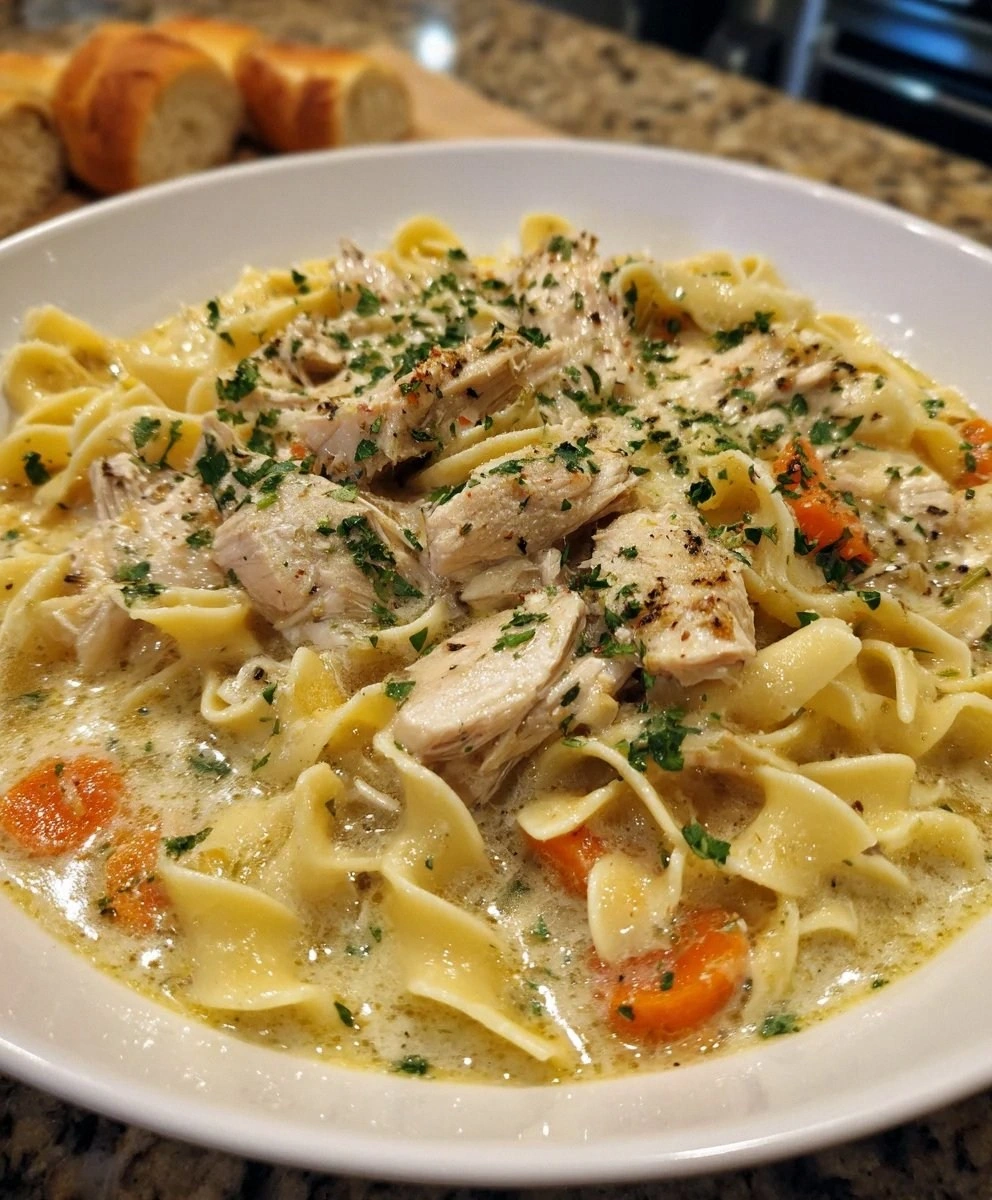
That crockpot chicken and noodles moment rewrote my weeknight rules. No searing, no babysitting, no mountain of pans. Just tender chicken that shreds at the side-eye of a fork, noodles that drink up gravy like they're at an all-you-can-eat buffet, and a sauce so glossy it could star in its own shampoo commercial. Friends keep asking why I don't get bored of it. The honest truth? Every time I make a batch I find a new reason to fall apart a little—maybe it's the way the parsley flecks look like confetti on snow, or how the butter melts into the broth and turns it the color of late-afternoon sun. My neighbor swears it cured her Sunday scaries; my nephew calls it "pot pie without the crust," which is basically a kid's way of awarding a Michelin star.
If you've ever wrestled with dry chicken, gummy noodles, or sauces that split into an oily puddle, pull up a chair. I'm about to hand you the blueprint that fixes every single one of those heartbreaks. We're talking crockpot 101 meets grandma-level comfort, with a few sneaky upgrades that restaurants don't want you to know. Think of it as culinary therapy in a bowl—low effort, high reward, zero judgment. And yes, I dare you to taste this and not go back for seconds while standing at the counter in your pajamas.
Picture yourself pulling this out of the slow cooker, the whole kitchen smelling like you hired a professional grandmother. The ceramic insert is heavy, the lid still rattles from the last bubble, and when you peek inside the steam fogs your glasses in the best possible way. That's the moment you'll realize dinner isn't just food—it's a time machine back to every safe, warm memory you forgot you had. Let me walk you through every single step—by the end, you'll wonder how you ever made it any other way.
What Makes This Version Stand Out
- Velvet-Soft Protein: Instead of rubbery breast cubes, we let the chicken lounge in gentle heat until it relaxes into shreddable strands that behave like pasta, not hockey pucks. The result is meat so tender it practically melts into the noodles, creating a seamless bite.
- One-Pot Wizardry: Everything—protein, veg, starch—lives in the same ceramic womb. No colander juggling, no separate saucepans, no sink full of shame. You literally drop, stir, forget, and feast.
- Butter-Lovers' Bonus: Most recipes timidly suggest a tablespoon. We throw in a whole stick, because life is short and your taste buds deserve hazard pay. It mingles with the condensed soup and broth until the sauce tastes like velvet pajamas for your mouth.
- Texture Tug-of-War: The egg noodles cook right in the gravy, releasing starch that thickens everything while still staying pleasantly chewy. You get that luscious pot-pie vibe without a gloppy flour bomb.
- Gateway Leftovers: Make a double batch on Sunday and you'll have lunches that reheat like a dream, plus enough shredded chicken to stuff quesadillas or top salads all week. Meal-prep without the beige sadness.
- Kid-Proof Yet Date-Night Elegant: Little humans love the buttery noodle situation, while adults notice the whisper of garlic and bouillon depth. Add a glass of white wine and suddenly Tuesday feels like a tiny celebration.
Alright, let's break down exactly what goes into this masterpiece...
Inside the Ingredient List
The Flavor Base
Chicken bouillon is the tiny but mighty hero here. One humble tablespoon wakes up the whole party, giving the broth a roasted depth that canned soup alone can't deliver. Skip it and the dish tastes flat, like a movie without a soundtrack. If you're out, crush a cube between spoons, but don't try to eyeball granules—too much and you'll feel like you swallowed the ocean.
Cream of chicken soup acts like edible glue, binding the butter and broth into a silky matrix. Reach for the regular version if you want maximum nostalgia, but the 98-percent-fat-free can works in a pinch; just add an extra pat of butter to compensate. Some folks swear by cream of mushroom for an earthier spin—do it if you like, but know you're drifting into "different recipe" territory.
The Texture Crew
Egg noodles aren't negotiable; they're the carb equivalent of a down comforter. Their ruffled edges grab sauce, and the yolk in the dough keeps them from dissolving into mush. Buy the widest bag you can find—you'll thank me when you're fishing out second helpings. If you absolutely must substitute, go with fresh pappardelle, but reduce the cook time by 30 minutes and add during the last hour.
Butter is the silent partner that makes dairy-averse people question their life choices. It lubricates the noodles and carries fat-soluble flavor compounds straight to your brain's pleasure center. Unsalted is ideal so you control the sodium, but if all you have is salted, just ease up on the additional salt later.
The Unexpected Star
Dried parsley often gets mocked as the wallflower of herbs, yet here it plays a crucial visual role. Those flecks signal "freshness" to your eyes even when the garden is buried under snow. A quick rub between your palms before sprinkling releases aromatic oils, giving a faint grassy note that lifts all that richness. No parsley? Use dried chives or even a pinch of tarragon, but promise me you won't skip the green—color matters more than you think.
Garlic powder is the lazy cook's best friend. It disperses evenly without the risk of burning, and in a slow braise it rehydrates gently, tasting mellow and rounded rather than sharp. Fresh garlic can turn acrid over six hours, so stick with the dusty stuff for once.
The Final Flourish
Salt and pepper aren't afterthoughts—they're the steering wheel. Taste at the end and adjust with the confidence of a chef: add salt in tiny pinches until the flavors snap into focus, then crack pepper until you can smell it from two feet away. It's that simple, and it's what separates "good" from "can't-stop-eating."
Everything's prepped? Good. Let's get into the real action...
The Method — Step by Step
- Lay the chicken breasts in the bottom of a 6-quart slow cooker like you're tucking them into a cozy bed. They can overlap slightly; they'll shrink as they relax. Season both sides with a confident shower of salt and pepper—this is your only chance to season the meat directly, so don't be shy. Walk away for five minutes and let the salt start pulling juices to the surface; it's like a tiny brine session without extra dishes.
- Dot the chicken with pats of cold butter. Cold matters: as it melts slowly it emulsifies with the broth instead of greasing out. Scatter the garlic powder evenly so every forkful has a mellow back-note of warmth. Your kitchen should already smell like potential.
- Whisk together the condensed soup, chicken broth, and bouillon in a bowl until the mixture looks like beige velvet. Pour it over the chicken; the liquid should come halfway up the sides, not drown them. The goal is to braise, not boil. Give the insert a gentle jiggle to settle everything; resist the urge to stir—you'll shred the meat later.
- Clamp on the lid and set to LOW for 5 ½ hours. This is the sweet spot where collagen melts but muscle fibers don't seize. If you're running late, HIGH for 3 hours works, but the texture edges toward stringy. Don't open the lid; every peek costs you 15 minutes of recovery time, and your future hunger pangs will not forgive you.
- When the timer dings, lift the lid away from your face so the fragrant steam doesn't fog your glasses. Grab two forks and shred the chicken right in the pot. It should fall apart like gossip at a family reunion. Stir so the meat bathes in the sauce and every strand gets coated.
- Dump the dry egg noodles on top of the saucy chicken. Do not stir yet—keeping them above prevents mushiness. Pour an additional cup of warm broth over the noodles to encourage even cooking. Replace the lid and cook on LOW for another 25-30 minutes, until the noodles are al dente. Check at 20; slow cookers vary like snowflakes.
- This next part? Pure magic. When the noodles are tender, give everything a gentle fold. The starch from the pasta will thicken the sauce to silky perfection. If it seems thick, loosen with a splash of milk; if too thin, let it stand uncovered for five minutes—gravity is your friend.
- Finish with dried parsley and a final pat of butter for sheen. Stir until the butter melts into a glossy topcoat. Taste, adjust salt, and crack fresh pepper with dramatic flair. Serve directly from the crockpot so the edges stay saucy and the center stays steamy. Scoop into shallow bowls, curl up under a blanket, and prepare for the inevitable silence as everyone inhales dinner.
That's it—you did it. But hold on, I've got a few more tricks that'll take this to another level...
Insider Tricks for Flawless Results
The Temperature Rule Nobody Follows
Most slow cookers run hotter than they did in the '90s. If yours is younger than your teenager, shave 30 minutes off the low setting. Meat that sits above 200 °F for too long squeezes out moisture like a wrung sponge. A $7 oven thermometer parked inside for the first batch will calibrate your machine forever.
Why Your Nose Knows Best
Trust aroma checkpoints. At hour three you should smell buttery chicken; if it's faint, bump the temp to high for 20 minutes to kick-start Maillard browning. Conversely, if the scent is almost too intense by hour two, switch to warm—your cooker runs hot and the meat is already done. Your olfactory bulb is basically a built-in meat thermometer.
The 5-Minute Rest That Changes Everything
After the final stir, let the pot stand uncovered for five minutes before serving. This brief pause allows starch to fully hydrate and flavors to marry. A friend tried skipping this once—let's just say the sauce tasted like chicken-ish water. Patience isn't virtue; it's flavor.
Creative Twists and Variations
This recipe is a playground. Here are some of my favorite ways to switch things up:
Mushroom Velvet
Swap cream of chicken for cream of mushroom and fold in sautéed baby bellas at the end. Earthy, woodsy, and perfect for nights you want forest vibes without leaving the couch. Top with a whisper of fresh thyme and watch grown adults swoon.
Buffalo Blaze
Replace half the broth with Frank's RedHot and add a crumbled wedge of blue cheese when serving. The slow cooker tames the heat, leaving a gentle burn that builds like gossip. Celery sticks on the side are mandatory for crunch and virtue signaling.
Lemon-Dill Delight
Skip the parsley and finish with zest of one lemon plus a palmful of dried dill. Bright, springy, and ideal for those March evenings when you're pretending winter is over. Serve with iced tea and a fake tan.
Smoky Mountain
Add a teaspoon of smoked paprika and swap bouillon for chipotle-flavored Better Than Bouillon. The broth turns a sunset orange and tastes like camping without mosquitoes. Stir in roasted corn kernels for bonus campfire points.
Green Goddess Lite
Stir in a handful of baby spinach during the last two minutes and finish with a tablespoon of pesto. The heat wilts the greens just enough, and basil perfume lifts the whole dish into "I swear I planned this" territory.
Storing and Bringing It Back to Life
Fridge Storage
Transfer cooled leftovers to airtight glass containers; they won't stain like plastic. The sauce will thicken into a pudding as it chills—this is normal and glorious. Refrigerate up to four days, but good luck making it last that long. Keep noodles submerged to prevent rubbery edges.
Freezer Friendly
Portion into quart-size freezer bags, press out excess air, and freeze flat for space-saving bricks. Label with masking tape; future you has selective memory. Thaw overnight in the fridge, never on the counter—bacteria love lukewarm gravy. Use within three months for peak happiness.
Best Reheating Method
Slide the cold mass into a saucepan with a splash of milk or broth. Warm over medium-low, stirring gently, until the sauce loosens and the chicken relaxes. Microwave works in a pinch, but cover with a damp paper towel to create steam. Add a tiny splash of water before reheating—it steams back to perfection and tastes almost first-day fresh.