Love this? Pin it for later! 📌
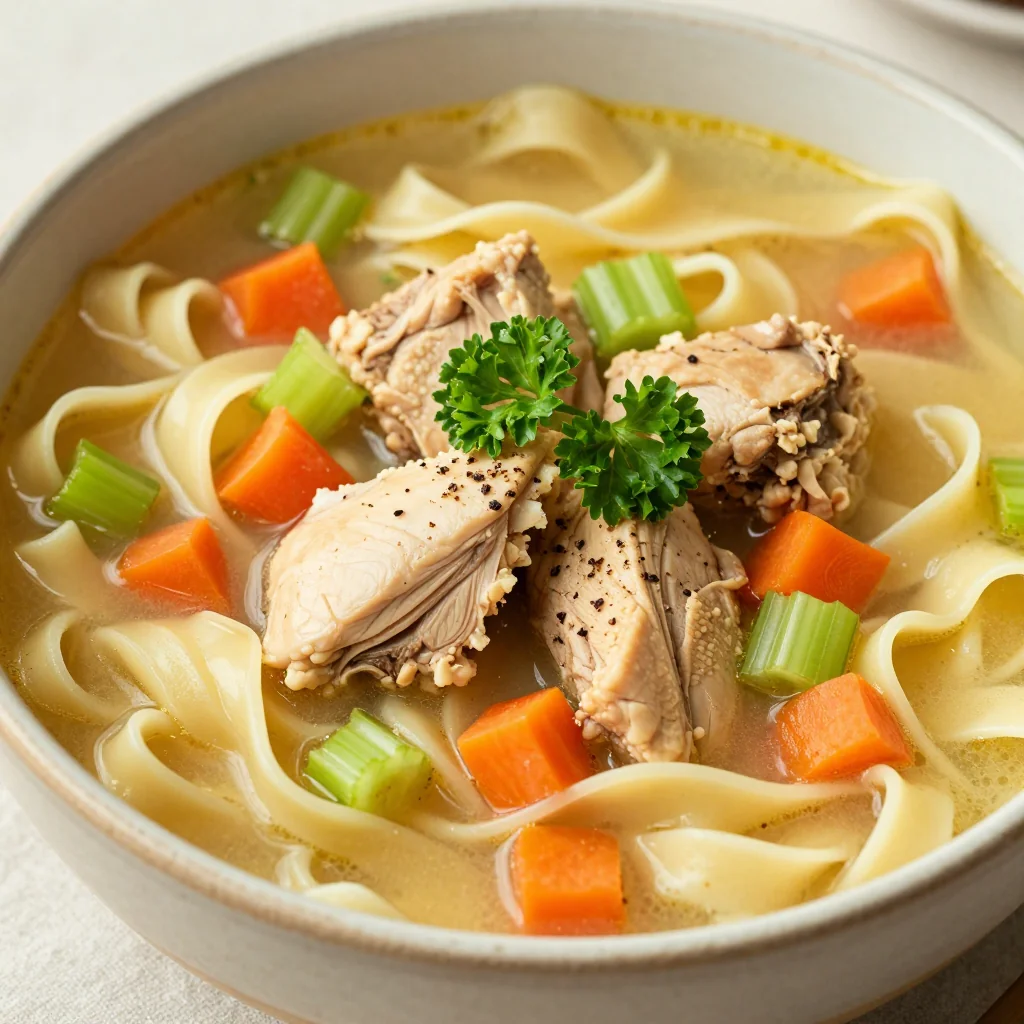
There's something magical about the way a steaming bowl of creamy chicken noodle soup can transform even the dreariest winter afternoon into a moment of pure comfort. After fifteen years of tweaking, tasting, and perfecting this recipe, I'm convinced it's the ultimate cure-all: whether you're battling a stubborn cold, soothing a broken heart, or simply craving the edible equivalent of a warm hug.
I first developed this version during a particularly brutal February when my twins were teething and my husband was traveling for work. The traditional clear-broth version I'd grown up with suddenly felt too thin, too sad. I wanted something that would coat my spoon (and my soul) with velvety richness, yet still taste bright and fresh. What emerged from that frantic weeknight experimentation was a soup so luxuriously creamy it could make a grown woman weep with gratitude, yet so packed with vegetables and tender chicken that it felt genuinely nourishing.
Now, every October, I stockpile wide egg noodles in my pantry like a squirrel preparing for hibernation. Because once the first frost hits, this soup becomes our family's weekly ritual. My daughter swirls in extra peas; my son insists on double carrots. My husband, who claims to dislike "creamy soups," somehow manages to polish off two bowls every single time. The best part? It tastes even better the second day, meaning Sunday's supper becomes Monday's lunch, and suddenly the week feels a little more manageable.
Why This Recipe Works
- Double dairy magic: A combination of heavy cream and cream cheese creates an impossibly silky texture that won't separate or curdle
- Two-stage vegetable cooking: Carrots and celery get a quick sauté for depth, then finish simmering in the broth to maintain their vibrant flavor
- Herb-infused cream: Steeping fresh thyme and bay leaves in the dairy prevents the soup from tasting flat or one-dimensional
- Rotisserie shortcut: Using a store-bought rotisserie chicken means you can have dinner on the table in 35 minutes without sacrificing flavor
- Noodle control: Cooking the egg noodles separately and adding them at the end prevents that dreaded swollen, mushy texture
- Make-ahead friendly: The base can be prepared up to 3 days ahead; simply reheat and add freshly cooked noodles
Ingredients You'll Need
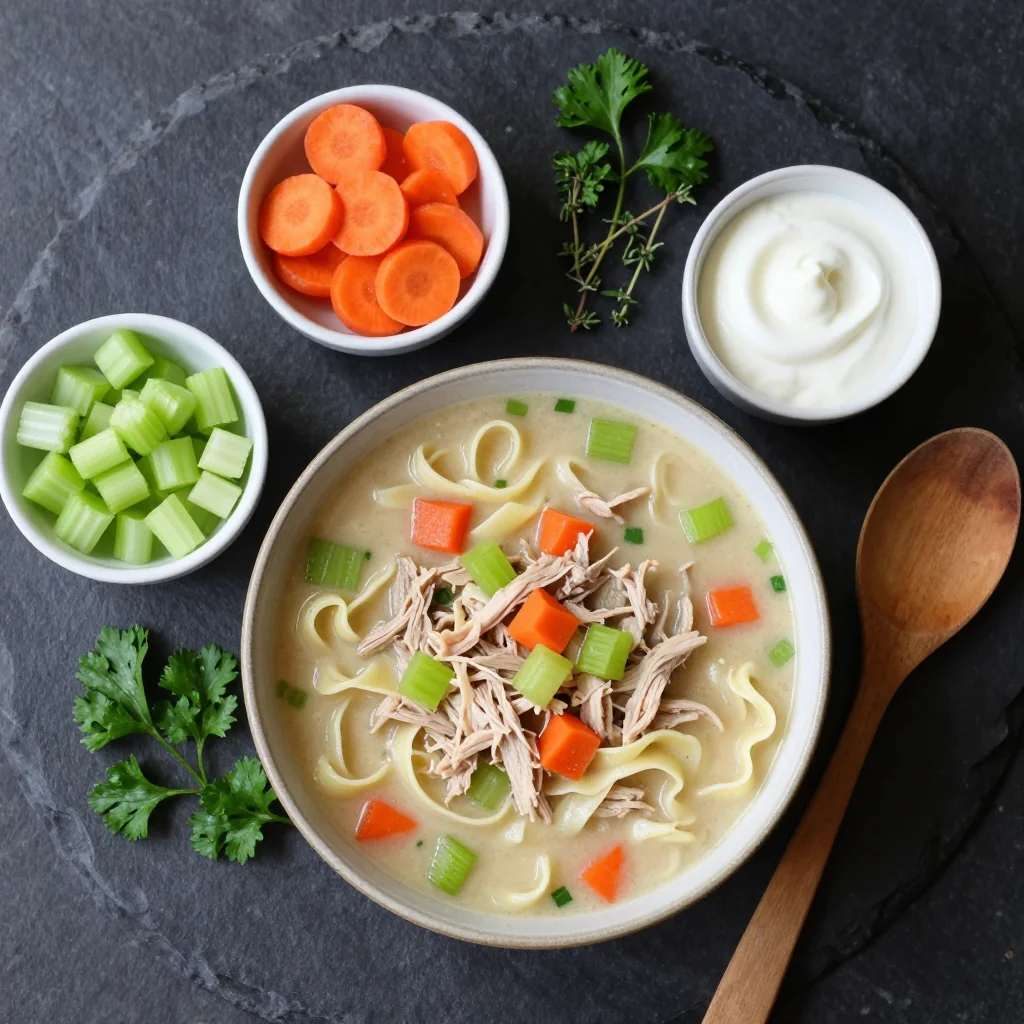
Before we dive into the cooking process, let's talk ingredients. Quality matters here—not in an intimidating, only-shop-at-farmers-markets way, but in a your-soup-will-taste-like-what-you-put-in-it way. The good news? Most of these are pantry staples you probably already have.
Rotisserie Chicken: The ultimate weeknight shortcut. Look for one that's golden brown, not pale or overly shiny (which indicates it's been sitting under heat lamps too long). If you're feeling ambitious, you can absolutely roast your own chicken—just make sure you have about 3 cups of shredded meat. Leftover turkey works beautifully too, especially after Thanksgiving.
Wide Egg Noodles: These broad ribbons are traditional for a reason—they catch the creamy broth perfectly. If you can't find them, pappardelle broken into 2-inch pieces works, as does fusilli or even small shells. Avoid thin noodles like angel hair; they'll dissolve into mush.
Heavy Cream vs. Half-and-Half: I tested this recipe with every dairy option imaginable, and heavy cream wins for both flavor and stability. It won't curdle when reheated, and it creates that restaurant-quality richness. In a pinch, you can use half-and-half, but the soup will be thinner and you'll need to be more careful about heat control.
Vegetables: The holy trinity of soup vegetables—onions, carrots, and celery—form the aromatic base. Buy carrots with the greens still attached if possible; they taste sweeter. For celery, look for pale green stalks with fresh, crisp leaves. Those sad, rubbery celery ribs in the back of your crisper drawer? Compost them. Fresh vegetables make all the difference.
Fresh Herbs vs. Dried: Fresh thyme is non-negotiable here. Its lemony, slightly minty flavor is what makes this soup taste bright rather than heavy. If you must substitute, use 1 teaspoon dried thyme, but honestly, buy the fresh stuff. Bay leaves are equally important—they add a subtle depth you can't replicate.
Chicken Broth: Use a good-quality low-sodium broth so you can control the salt level. I'm partial to the organic store brands—they taste like actual chicken, not like salt water with yellow food coloring. If you have homemade stock, congratulations, you're officially winning at life.
How to Make Cozy Creamy Chicken Noodle Soup with Carrots and Celery
Prep Your Ingredients
Start by shredding your rotisserie chicken into bite-sized pieces, discarding skin and bones. Dice 1 large onion, slice 4 carrots into 1/4-inch coins, and slice 3 celery stalks. Mince 4 cloves garlic. Measure out your spices: 1 teaspoon salt, 1/2 teaspoon black pepper, 1/2 teaspoon dried oregano. This mise en place approach prevents that frantic scrambling that happens when the onions start browning faster than you can chop.
Sauté the Aromatics
In a heavy-bottomed Dutch oven, melt 4 tablespoons butter over medium heat until foaming subsides. Add onions with a pinch of salt and cook 5-6 minutes until translucent and just starting to brown at the edges. Add carrots and celery, cook another 7-8 minutes until vegetables are tender but still have a slight bite. The goal here is to build flavor—those browned bits on the bottom of the pot are liquid gold.
Create the Roux
Sprinkle 1/3 cup all-purpose flour over the vegetables and stir constantly for 2 minutes. This eliminates any raw flour taste and creates the thickening base for your soup. The mixture will look like pasty vegetables—this is exactly right. Keep stirring to prevent burning; if it's browning too quickly, reduce heat slightly.
Build the Broth
Slowly whisk in 6 cups chicken broth, about 1 cup at a time, stirring constantly to prevent lumps. Once all broth is added, bring to a gentle simmer. Add 2 bay leaves, 4 sprigs fresh thyme, 1/2 teaspoon dried oregano, 1 teaspoon salt, and 1/2 teaspoon black pepper. Reduce heat to low and simmer 15 minutes to marry flavors.
Infuse the Cream
While soup simmers, pour 2 cups heavy cream into a small saucepan. Add 2 additional sprigs thyme and 1 bay leaf. Heat over low until just steaming—do not boil. Remove from heat and let steep 10 minutes. This step seems fussy but creates incredibly complex flavor that makes people ask "what's your secret?"
Cook the Noodles Separately
Bring a large pot of salted water to boil. Cook 8 ounces wide egg noodles according to package directions for al dente (usually 7-8 minutes). Drain and immediately toss with 1 tablespoon olive oil to prevent sticking. Cooking noodles separately prevents them from absorbing all your beautiful broth and becoming mushy leftovers.
Finish the Soup
Remove bay leaves and thyme stems from both the soup and cream. Stir infused cream into soup along with 4 ounces room-temperature cream cheese, whisking until completely smooth. Add shredded chicken and simmer 5 minutes until heated through. Taste and adjust seasoning—soup should be luxuriously thick but still spoon-able.
Serve and Garnish
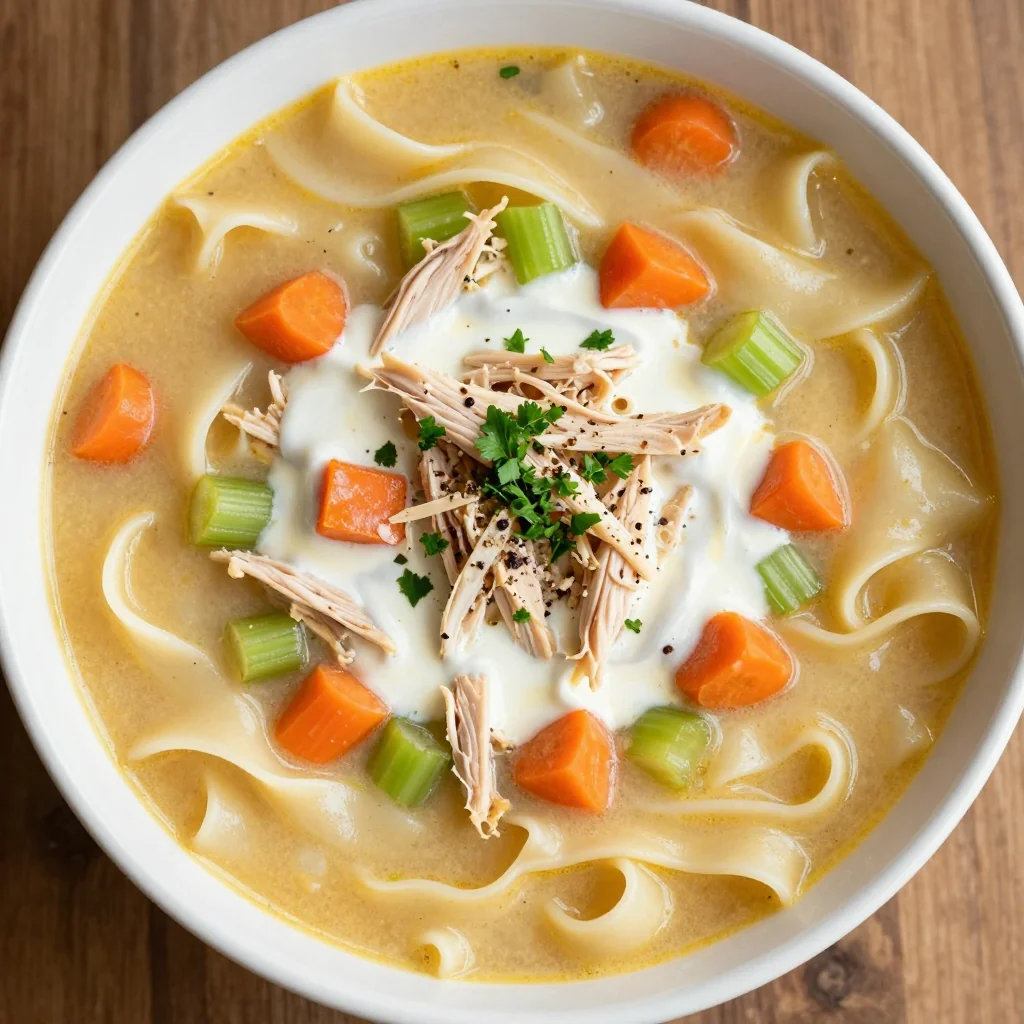
To serve, place a generous scoop of cooked noodles in each bowl, then ladle hot soup over top. Garnish with chopped fresh parsley, a grinding of black pepper, and if you're feeling decadent, a swirl of additional cream. Serve immediately with crusty bread for sopping up every last drop.
Expert Tips
Temperature Control
Never let cream-based soups come to a rolling boil once dairy is added. The proteins will seize and create grainy texture. Gentle simmering is key to maintaining that silky mouthfeel.
Make-Ahead Strategy
Prepare soup base and noodles separately up to 3 days ahead. Store in separate containers and combine when reheating. This prevents the pasta from becoming bloated and mushy.
Thickness Control
If soup becomes too thick upon reheating, thin with additional chicken broth or milk. Start with 1/4 cup increments—you can always add more, but you can't take it out.
Freezing Instructions
Freeze soup base (without noodles) in airtight containers for up to 3 months. Thaw overnight in refrigerator, reheat gently, and add freshly cooked noodles when serving.
Variations to Try
Vegetarian Version
Replace chicken with 2 cans white beans, use vegetable broth, and add 2 cups sliced mushrooms for umami. Stir in baby spinach at the end for color and nutrition.
Spicy Southwest
Add 1 diced jalapeño with onions, substitute fire-roasted tomatoes for 1 cup broth, and finish with lime juice and cilantro. Top with crispy tortilla strips.
Low-Carb Option
Replace noodles with cauliflower rice or shirataki noodles. Use half-and-half instead of heavy cream to reduce calories, and add extra vegetables like zucchini and bell peppers.
Storage Tips
Proper storage is crucial for maintaining the luxurious texture of this soup. The enemy here is separation and mushy noodles, but with the right technique, you can enjoy leftovers that taste almost as good as the first day.
Refrigerator Storage: Cool soup completely before storing. Divide into shallow containers to speed cooling and prevent bacterial growth. Store soup base and noodles separately in airtight containers. The base will keep 4 days, noodles 3 days. When reheating, warm soup gently over medium-low heat, stirring frequently. Add a splash of broth or milk if needed to achieve desired consistency.
Freezer Instructions: This soup base freezes beautifully, but leave out the noodles—they become mushy when thawed. Ladle completely cooled soup into freezer-safe containers, leaving 1-inch headspace for expansion. Label with contents and date. Freeze up to 3 months. Thaw overnight in refrigerator, then reheat gently. Cook fresh noodles separately and add when serving.
Reheating Tips: Always reheat cream soups gently over medium-low heat, stirring frequently. Microwaving works in a pinch—use 50% power and stir every 30 seconds. If soup appears curdled, whisk vigorously or blend briefly with an immersion blender. The addition of a splash of warm milk or broth often helps restore smooth texture.
Frequently Asked Questions
While you can substitute whole milk for heavy cream, the soup will be significantly thinner and less luxurious. If you need a lighter option, try using half-and-half, but be aware that it may curdle more easily when reheated. For best results, stick with heavy cream for special occasions and save the lighter versions for everyday meals.
Cream-based soups need more seasoning than you think. The dairy mutes flavors, so don't be shy with salt. Taste after adding cream and adjust as needed. Also, make sure you're using fresh herbs—dried thyme and bay leaves lose potency quickly. A squeeze of lemon juice at the end can also brighten the entire dish.
Yes, but with modifications. Sauté vegetables first, then transfer to slow cooker with broth and cook on low 6-7 hours. Add shredded chicken during last hour. Stir in cream cheese and cream during last 30 minutes, keeping on warm setting. Do not let it boil. Cook noodles separately and add when serving. The texture won't be quite as silky, but it's still delicious.
The key is temperature control. Never let cream-based soups boil vigorously. Heat gently over medium-low, stirring frequently. If reheating, use low heat and add a splash of warm broth if soup seems to be separating. Room temperature dairy incorporates more smoothly than cold. If curdling occurs, an immersion blender usually restores smoothness.
Cream cheese adds tang and stability, but you can substitute with 1/4 cup sour cream or Greek yogurt. Mix with a few tablespoons of hot soup to temper before adding to prevent curdling. For a richer option, use 2 tablespoons softened butter whisked with 2 tablespoons flour to create a beurre manié, then whisk into hot soup.
Absolutely! This recipe doubles beautifully—just use a larger pot and plan for slightly longer cooking times. You may need to sauté vegetables in batches to avoid overcrowding. When doubling, increase cream to 3 1/2 cups rather than 4 to prevent soup from becoming too rich. Perfect for feeding a crowd or stocking your freezer.
Ingredients
Instructions
- Prepare ingredients: Shred chicken, dice vegetables, and measure all ingredients before starting.
- Sauté vegetables: Melt butter in Dutch oven over medium heat. Cook onions 5-6 minutes, add carrots and celery, cook 7-8 minutes until tender.
- Make roux: Sprinkle flour over vegetables, stir constantly 2 minutes to eliminate raw flour taste.
- Build broth: Slowly whisk in chicken broth, add herbs and seasonings, simmer 15 minutes.
- Infuse cream: Heat cream with additional thyme and bay leaf until steaming, steep 10 minutes.
- Cook noodles: Boil egg noodles separately until al dente, drain and toss with olive oil.
- Finish soup: Stir infused cream and cream cheese into soup base until smooth, add chicken.
- Serve: Place noodles in bowls, ladle soup over top, garnish with parsley.
Recipe Notes
For best results, cook noodles separately and add when serving to prevent mushy texture. Soup base can be made 3 days ahead; reheat gently and add freshly cooked noodles. Never let cream-based soups boil vigorously after dairy is added.