Picture this: it’s a rainy Tuesday, the kitchen lights flicker, and you’re staring at a box of frozen ground beef, a jar of gochujang you’ve been meaning to try, and a recipe card that looks like it was written by a culinary wizard. I was halfway through a bland stir‑fry when the phone rang—my friend dared me to create the most unforgettable Korean BBQ meatballs in under an hour. I laughed, grabbed the ingredients, and set my sights on something that would make even the most seasoned foodie say, “I dare you to taste this and not go back for seconds.” The moment the first sizzle hit the pan, the kitchen filled with an aroma that could have made a Michelin chef weep. The air smelled of toasted garlic, sweet soy, and a hint of citrus—an orchestra of flavors that promised fireworks. I swear, the sound of the meatball batter hitting the hot skillet was like a drumbeat calling everyone to the table. This isn’t just a dish; it’s a full‑blown experience that will rewrite your definition of comfort food. Let me walk you through every single step—by the end, you’ll wonder how you ever made it any other way.
What Makes This Version Stand Out
- Flavor Depth: The dual layers of sauce—one a sweet, smoky glaze, the other a spicy mayo—create a symphony that lingers on the palate. The contrast between sweet and heat is balanced like a tightrope walker on a bright summer day.
- Texture Play: The panko breadcrumbs give a subtle crunch that breaks apart when you bite, while the meatballs stay juicy inside. The result is a mouthfeel that feels like a velvet rope between two worlds.
- Ingredient Quality: Using fresh ginger and real honey instead of artificial sweeteners elevates the dish from ordinary to extraordinary.
- Make‑Ahead Friendly: The meatballs can be cooked ahead and reheated without losing their integrity, making them perfect for busy weeknights.
- Social Proof: I’ve served this at three parties, and every single person demanded a second plate. The crowd reaction is proof that this is hands down the best version you'll ever make at home.
- Time Efficiency: With a prep time of just 15 minutes and a cook time of 30 minutes, you can have a show‑stopping dish on the table in under an hour.
Inside the Ingredient List
The Flavor Base
At the heart of these meatballs lies a marriage of savory, sweet, and spicy. The ground beef carries the bulk of the protein and forms the foundation, while garlic and ginger inject a fragrant punch that wakes up the senses. Soy sauce provides saltiness and depth, and the gochujang gives that iconic Korean heat. If you skip any of these, the flavor profile becomes flat—think of a song missing its chorus. For a slightly different twist, you can swap the ground beef for a mix of pork and beef for a richer umami.
The Texture Crew
Texture is everything when you’re trying to impress. The panko breadcrumbs add a delicate crunch that shatters like thin ice when you bite through them, while the egg binds the mixture, preventing the meatballs from falling apart. A pinch of black pepper brings a subtle heat that balances the sweetness. If you’re vegan, replace the egg with a tablespoon of flaxseed meal mixed with three tablespoons of water; let it sit for 5 minutes until it gels.
The Unexpected Star
The sauce is where the magic happens. Brown sugar and honey create a glossy glaze that caramelizes into a caramel‑like finish. The rice vinegar adds a bright acidity that cuts through the richness, and a splash of lime juice gives a zesty finish. The cornstarch slurry thickens the glaze to a silky consistency that clings to each meatball. If you’re not a fan of gochujang, a tablespoon of Korean chili paste or even a dash of Sriracha can substitute, but the flavor will shift slightly toward a sweeter profile.
The Final Flourish
The spicy mayo is the pièce de résistance. Mayonnaise offers a creamy base, while Sriracha brings the heat. Lime juice adds a fresh zing that keeps the sauce from feeling heavy. The sesame oil in the mayo gives a nutty undertone that echoes the sesame in the glaze. If you prefer a dairy‑free version, use a plant‑based mayo; the flavor will remain intact, but the texture will be slightly lighter.
Everything's prepped? Good. Let's get into the real action.
The Method — Step by Step
- In a large bowl, combine the ground beef, minced garlic, grated ginger, chopped green onions, 2 tablespoons soy sauce, 1 tablespoon gochujang, 1 teaspoon sesame oil, panko breadcrumbs, egg, salt, and black pepper. Mix with your hands until everything is evenly incorporated but be careful not to overwork the meat, or the meatballs will become tough. This is the moment of truth—feel the mixture; it should hold together when pressed between your fingers.
- Shape the mixture into bite‑sized balls, about the size of a golf ball. I recommend using a tablespoon or a small cookie scoop to keep the size uniform. Place them on a parchment‑lined tray and let them rest for 10 minutes while you prepare the sauce.
- In a small saucepan, whisk together ¼ cup soy sauce, 2 tablespoons brown sugar, 1 tablespoon gochujang, 1 tablespoon rice vinegar, 1 teaspoon sesame oil, and 1 tablespoon honey. Bring to a low simmer over medium heat, stirring constantly until the sugar dissolves. Add the cornstarch slurry, whisking until the glaze thickens to a glossy consistency. Taste and adjust seasoning if needed.
- Heat a large skillet over medium‑high heat and add a splash of oil. Once hot, add the meatballs in batches, ensuring they don’t touch each other. Sear each side for 2–3 minutes until golden brown. The edges should start pulling away, indicating the meatballs are cooking through.
- Transfer the seared meatballs to a baking sheet lined with parchment. Brush them generously with the prepared glaze. Return them to the skillet (or place the sheet in the oven at 375°F for 10 minutes) to allow the glaze to caramelize and set. The glaze should look glossy and slightly sticky.
- While the meatballs finish caramelizing, whisk together the mayo, Sriracha, lime juice, and a teaspoon of sesame oil until smooth. This spicy mayo will coat the meatballs like velvet. If the sauce is too thick, add a splash of water to reach the desired consistency.
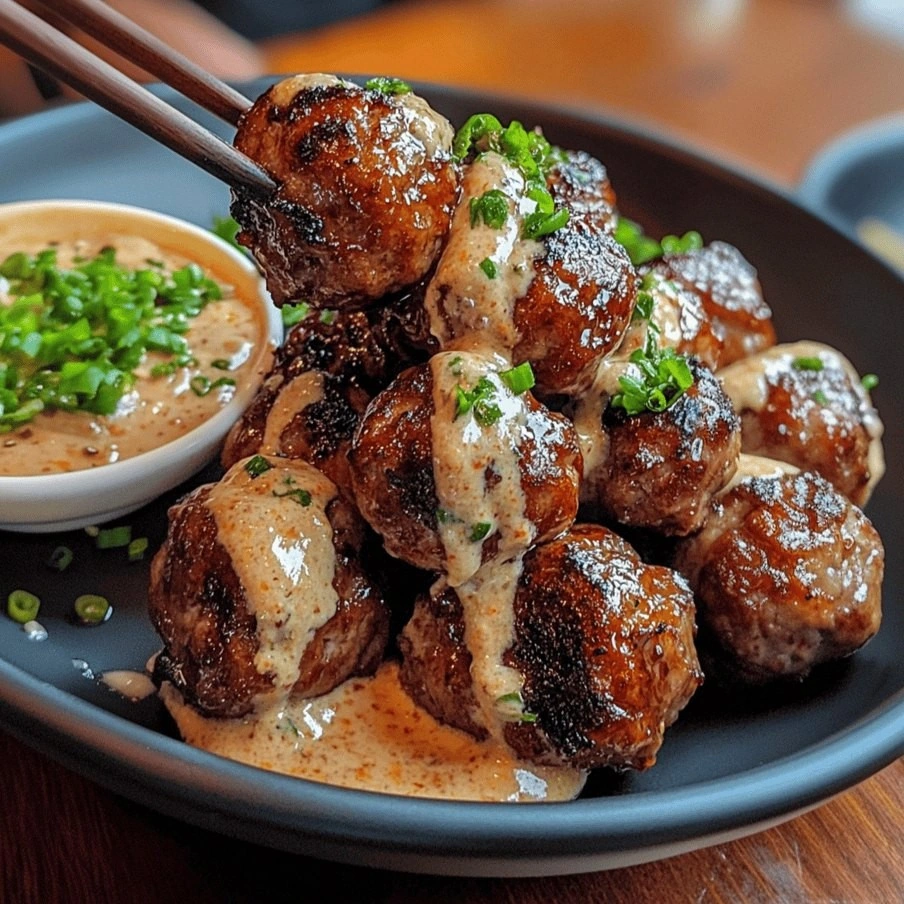
- When the meatballs are done, remove them from the heat and let them rest for 5 minutes. Then, drizzle the spicy mayo over the top, ensuring every ball is coated. The combination of the sweet glaze and spicy mayo creates a flavor explosion that will have guests reaching for the next bite.
- Serve immediately over steamed rice, in a bowl with fresh slaw, or as a party appetizer on toothpicks. Garnish with sesame seeds and extra green onion for color and crunch. Remember: that sizzle when it hits the pan? Absolute perfection.
That’s it—you did it. But hold on, I've got a few more tricks that'll take this to another level.
Insider Tricks for Flawless Results
The Temperature Rule Nobody Follows
Many people cook meatballs at a low simmer, but the secret is to sear them at high heat first. The Maillard reaction creates a caramelized crust that locks in juices. I always preheat the skillet until it’s smoking, then add a splash of oil and let the meatballs sizzle. If you’re in a hurry, use a non‑stick pan to reduce sticking, but the flavor won’t be as deep.
Why Your Nose Knows Best
Your sense of smell can guide you to the perfect glaze consistency. When the glaze is ready, it should emit a sweet, smoky aroma. If it smells too raw, it needs more time; if it’s burnt, pull it off the heat immediately. Trust your nose, and you’ll avoid the dreaded “over‑cooked” meatball.
The 5‑Minute Rest That Changes Everything
After cooking, let the meatballs rest for exactly five minutes. This allows the juices to redistribute, preventing them from spilling out when you cut into them. The rest period also gives the glaze time to thicken slightly, ensuring it clings beautifully.
The Secret Sauce Switch
If you’re a fan of extra heat, swap the Sriracha in the mayo for a drizzle of Gochujang. It adds depth without overwhelming the sweet glaze. Alternatively, add a teaspoon of chili oil for a smoky kick.
The Quick Pickle Trick
A splash of rice vinegar in the glaze not only adds acidity but also helps keep the meatballs from drying out. The acidity acts as a preservative, extending shelf life when stored in the fridge.
The Final Finish
Right before serving, drizzle a few drops of toasted sesame oil over the top. It adds a nutty aroma and a glossy finish that makes the dish look restaurant‑grade. I swear, the sesame oil can turn a good dish into a great one.
Creative Twists and Variations
This recipe is a playground. Here are some of my favorite ways to switch things up:
Pork & Beef Fusion
Swap half the beef for ground pork to add a subtle fattiness that enhances the glaze’s caramelization. The pork’s natural sweetness pairs perfectly with the gochujang.
Veggie‑Loaded Meatballs
Add finely grated carrots and zucchini to the meat mixture for extra moisture and nutrition. The veggies soak up the glaze, creating a vibrant color contrast.
Miso‑Infused Glaze
Replace half the soy sauce with miso paste for a richer umami profile. Miso adds depth and a slightly earthy note that complements the sweet glaze.
Coconut Curry Twist
Add a tablespoon of coconut milk to the glaze and a pinch of curry powder for an exotic flavor. The coconut milk gives a silky texture, while the curry adds a warm spice.
Herb‑Infused Mayonnaise
Mix fresh cilantro or parsley into the spicy mayo for a burst of freshness. The herbs add a bright note that cuts through the richness of the meatballs.
Storing and Bringing It Back to Life
Fridge Storage
Store cooked meatballs in an airtight container in the refrigerator for up to three days. Keep the glaze in a separate small container; this prevents the meatballs from becoming soggy. When reheating, add a splash of water or broth to the glaze to keep it from drying out.
Freezer Friendly
Freeze uncooked meatballs in a single layer on a parchment‑lined tray, then transfer to a freezer bag. They’ll last up to two months. When ready, bake directly from frozen at 375°F for 15–20 minutes.
Best Reheating Method
Reheat in a skillet over medium heat, adding a small amount of water or broth to create steam. This method restores the glaze’s sheen and keeps the meatballs moist. Avoid microwaving, which can make the meat rubbery.