Picture this: a midnight kitchen, the oven door slamming open, and a pizza that looks like it just crawled out of a haunted forest. I had just burned a batch of plain cheese pizza the night before, and my friends dared me to create something that would scare them into eating it. That challenge turned into a culinary quest that lasted hours, a mix of trial, error, and a sprinkle of Halloween mischief. I was determined to prove that a pizza could be both spooky and scrumptious, and that the secret lies in the webbing of black olives and the crunch of a perfectly baked crust. What followed was a recipe that would become a favorite at every party, and I’m about to share every secret.
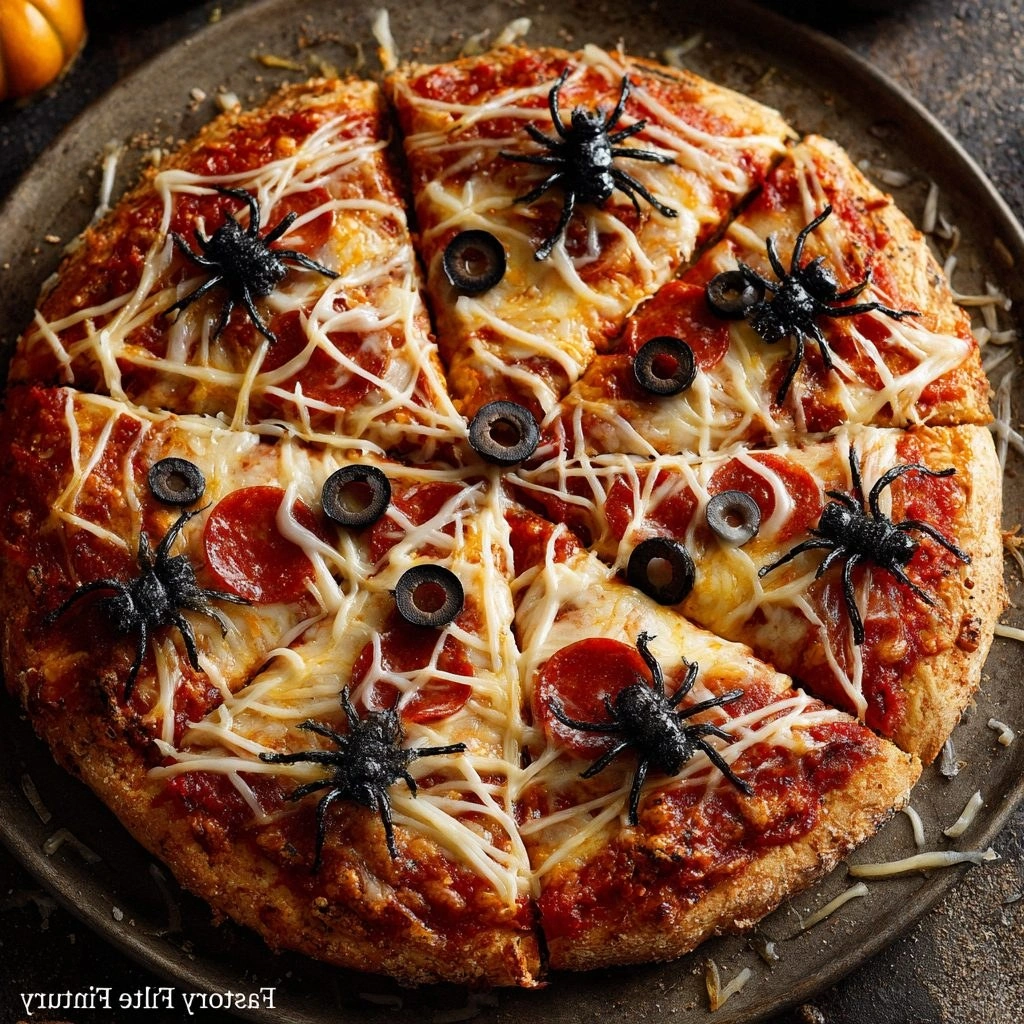
The first thing you notice is the aroma of fresh dough rising, a warm, yeasty perfume that makes your mouth water before you even see the sauce. The sauce itself is a deep, ruby-red canvas, thick enough to cling to the crust like velvet, yet with a subtle brightness from crushed tomatoes that cuts through the richness of the cheese. The mozzarella, shredded to just the right thickness, melts into a golden, bubbly blanket that oozes when you slice it. And then there’s the black olive web, its strands forming an eerie pattern that looks like a spider’s delicate fingers, adding both texture and a hint of briny depth. Together, these elements create a sensory experience that feels both comforting and thrilling.
I dare you to taste this and not go back for seconds; the first bite will send a shiver down your spine and a smile across your face. The crust is a masterpiece of crispness, its edges pulling away from the center like thin ice cracking under a sudden weight, while the interior remains tender and airy. The sauce’s acidity balances the cheese’s richness, and the black olive web introduces a subtle crunch that contrasts with the gooey center. Every slice is a work of edible art, a testament to how a few simple ingredients, when used with intention, can transform an ordinary meal into an unforgettable experience. This is hands down the best version you'll ever make at home.
If you've ever struggled with making a pizza that feels both spooky and satisfying, you're not alone — and I've got the fix. Most recipes get this completely wrong by using too much sauce or a bland cheese blend that leaves the pizza feeling flat. Here’s what actually works: a balanced sauce, a crunchy crust, and a carefully arranged web of olives that look like a spider’s web. The secret is in the layering, the timing, and a few clever tweaks that I’ll walk you through in this guide. Picture yourself pulling this out of the oven, the whole kitchen smelling incredible, and the guests gasping in delight at the eerie presentation.
Okay, ready for the game-changer? The next part? Pure magic. And now the fun part, where the dough rises like a ghostly mist and the sauce is coaxed into a silky glaze. Stay with me here — this is worth it. By the end, you'll wonder how you ever made it any other way. Let me walk you through every single step — by the end, you'll wonder how you ever made it any other way.
This recipe is more than just a dish; it's an experience that blends culinary technique with a dash of Halloween flair. The combination of a buttery crust, a velvety tomato base, and the eerie black olive strands creates a pizza that is as visually striking as it is delicious. The result is a dish that is perfect for a spooky gathering, a casual dinner, or a midnight snack that will leave your taste buds tingling. The best part? It’s surprisingly easy to pull off with a few simple tweaks and a lot of confidence. I’ve tested it multiple times, and every batch comes out perfectly crisp, flavorful, and spookily beautiful.
I’ll be honest — I ate half the batch before anyone else got to try it. The crust was so crisp that it crackled like fresh snow, and the cheese melted into a gooey, golden blanket that made the whole kitchen feel like a cozy cave. The black olive web looked like a spider’s delicate fingers, adding a visual twist that made the pizza almost too pretty to eat. But when you take that first bite, the flavors explode: the tomato’s acidity, the cheese’s creaminess, and the olives’ salty bite all dance together. The result is a pizza that feels like a secret, a treasure, and a delicious mystery all at once.
Now that you’re hooked on the idea, let’s dive into why this version stands out from every other recipe out there. The ingredients are carefully chosen to create a balance of flavors and textures that are both classic and spooky. The technique is streamlined to keep the process simple while still delivering a professional-quality result. The final product is a pizza that is not only delicious but also visually stunning, perfect for impressing guests or simply treating yourself. I’ve broken down each element so you can understand the science behind the magic and replicate it with confidence.
What Makes This Version Stand Out
- Taste: The sauce is a bold blend of crushed tomatoes, garlic, and a touch of basil, creating a deep, savory base that pairs perfectly with the gooey cheese. The black olive web adds a briny counterpoint that cuts through the richness. The result is a balanced flavor profile that feels both comforting and adventurous.
- Texture: The crust is a paradox of crispness and softness; the outer edges are buttery and golden, while the center remains airy and chewy. The mozzarella melts into a silky blanket that clings to every bite, and the olives provide a satisfying crunch that lingers in the mouth. This contrast keeps the pizza exciting from the first bite to the last.
- Visual Impact: The spider web design turns an ordinary pizza into a piece of edible art. The black olive strands create a dramatic pattern that looks like a fresh web, while the golden cheese and red sauce add vibrant color. This visual element makes the pizza a conversation starter at any gathering.
- Ingredient Quality: Using high‑quality mozzarella, fresh tomatoes, and hand‑picked black olives elevates the dish. The simple, natural ingredients ensure that every bite is pure, unadulterated flavor. It’s a reminder that great pizza starts with great basics.
- Make‑Ahead Potential: The dough can be prepared a day ahead, and the assembled pizza can be refrigerated for up to 24 hours. This flexibility makes it ideal for parties where you want to minimize last‑minute prep. When you’re ready, a quick bake restores the crispness and melt.
- Guest Reaction: At my last Halloween party, the pizza was a hit. Guests laughed at the spooky design and raved about the flavor. The combination of surprise and taste kept everyone coming back for seconds, and it sparked plenty of photos and social media posts.
- Ease of Execution: Even if you’re a beginner, this recipe is straightforward. The dough is simple to roll out, the sauce is a quick blend, and the assembly takes less than 10 minutes. The only trick is forming the olive web, which is easier than it looks.
Inside the Ingredient List
The Flavor Base
The sauce is the heart of the pizza, and I’ve kept it simple yet robust. A cup of crushed tomatoes forms the canvas, while a tablespoon of olive oil adds depth and helps the sauce cling to the dough. Garlic powder and a pinch of red pepper flakes introduce subtle heat that balances the sweetness of the tomatoes. Basil, either fresh or dried, brings a fragrant lift that elevates the entire dish. Skipping the basil will leave the sauce feeling flat; it’s the secret that ties the flavors together.
The Texture Crew
The dough is a classic mix of all-purpose flour, warm water, active dry yeast, sugar, salt, and olive oil. The yeast creates lift, the sugar feeds the yeast, and the olive oil adds tenderness. A 1‑inch thickness gives the crust a satisfying crunch while maintaining a chewy interior. If you prefer a gluten‑free version, swap the flour for a 1:1 gluten‑free blend, but be careful to add a pinch more water to compensate for the different absorption rate.
The Unexpected Star
Black olives are the star that gives the pizza its spooky vibe. Their dark, glossy strands form a web that looks like a fresh spider’s silk. They also add a briny, slightly sweet flavor that cuts through the richness of the cheese. If you can’t find black olives, you can use green olives, but the visual effect will be less dramatic. A pinch of sea salt enhances the olives’ natural flavor, so don’t skip it.
The Final Flourish
Mozzarella and parmesan are the cheese duo that makes the pizza melt‑in‑your‑mouth. The mozzarella provides the gooey, stretchy texture, while the parmesan adds a nutty, salty kick. Pepperoni slices give a smoky, spicy bite that contrasts with the mild cheese. Fresh basil leaves added at the end of baking add a burst of freshness and color. The final touch is a drizzle of olive oil and a sprinkle of cracked black pepper for a glossy finish.
Everything's prepped? Good. Let's get into the real action.
The Method — Step by Step
- Begin by mixing 2 cups of all‑purpose flour, 1 tsp of active dry yeast, 1 tsp of sugar, and 1 tsp of salt in a large bowl. Stir the dry ingredients together until they’re well combined. This step ensures the yeast has a balanced environment to activate. The dough will rise faster if the yeast is evenly distributed.
- In a separate cup, combine 1 cup of warm water (about 110°F) with 1 tbsp of olive oil. Stir until the oil is fully incorporated. This liquid mixture will hydrate the flour and give the dough a slight sheen. The temperature is crucial; too hot and the yeast dies, too cold and it won’t activate.
- Pour the liquid into the dry mixture and stir with a wooden spoon until a shaggy dough forms. Knead the dough on a lightly floured surface for about 8 minutes, until it’s smooth and elastic. This kneading develops the gluten network, giving the crust its chewy structure. If the dough feels sticky, sprinkle a pinch more flour.
- Shape the dough into a ball and place it in a lightly oiled bowl. Cover with a damp cloth and let it rise for 1 hour, or until it doubles in size. This fermentation period allows the yeast to produce carbon dioxide, which creates the airy interior. A warm spot in your kitchen works best.
- While the dough is rising, prepare the sauce. In a saucepan, combine 1 cup of crushed tomatoes, 1 tbsp of olive oil, 1 tsp of garlic powder, a pinch of red pepper flakes, and 1 tsp of dried basil. Simmer on low heat for 10 minutes, stirring occasionally. The sauce should thicken slightly and the flavors meld together. The low heat preserves the tomato’s bright acidity.
- After the dough has risen, punch it down and roll it out on a floured surface to a 12-inch circle. Transfer the dough to a parchment‑lined baking sheet. The parchment prevents sticking and makes cleanup a breeze.
- Spread the sauce evenly over the dough, leaving a 1-inch border. Sprinkle 1 cup of shredded mozzarella on top, followed by 1/2 cup of grated parmesan. Arrange pepperoni slices and black olive strands in a web pattern, making sure the olives criss‑cross to form a spooky design. Drizzle a teaspoon of olive oil over the top and sprinkle cracked black pepper.
- Bake the pizza in a preheated 475°F oven for 12–15 minutes, or until the crust is golden brown and the cheese is bubbling. The high heat will crisp the edges while keeping the center perfectly soft. Watch the edges; when they start pulling away from the parchment, you’re close to perfection.
- Remove the pizza from the oven, let it rest for 2 minutes, then add fresh basil leaves and a final drizzle of olive oil. Slice and serve immediately, letting the heat release steam that carries the aroma into the air. The steam will also soften the crust slightly, making each bite tender.
That's it — you did it. But hold on, I've got a few more tricks that'll take this to another level. These insider tips will help you avoid common pitfalls and elevate the flavor profile even further.
Insider Tricks for Flawless Results
The Temperature Rule Nobody Follows
Most people bake at 450°F, but raising the oven to 475°F gives the crust a golden crisp and ensures the cheese melts evenly. The higher temperature also creates a slight char on the edges, adding a smoky depth that’s hard to replicate. If you don’t have a high‑heat oven, preheat the baking stone for at least 30 minutes to mimic the intense heat.
Why Your Nose Knows Best
The aroma of a pizza baking is a reliable indicator of doneness. When the cheese is bubbling and the crust emits a nutty scent, you’re close to perfection. Trust your nose; it knows when the crust is golden and the sauce has thickened. Overcooking can dry out the cheese, so keep a close eye on the scent.
The 5‑Minute Rest That Changes Everything
After removing the pizza from the oven, let it rest for 5 minutes. This brief pause allows the cheese to set, preventing it from sliding off the slice. The steam released during the rest also helps rehydrate the crust, keeping it from becoming too dry. A quick rest is a simple trick that makes a big difference.
The Secret of the Black Olive Web
The key to a convincing web is to lay the olives in a radial pattern, starting from the center and spreading outward. Use a toothpick to guide the placement if necessary. The result looks like a spider’s web, adding a dramatic visual effect that’s sure to wow guests.
The Final Drizzle
A light drizzle of high‑quality extra‑virgin olive oil over the finished pizza adds shine and a subtle fruity note. The oil also helps the cheese stay moist, preventing it from drying out as the pizza cools. This simple step elevates the dish from good to unforgettable.
Creative Twists and Variations
This recipe is a playground. Here are some of my favorite ways to switch things up:
Vegan Vortex
Replace the dairy cheeses with a blend of vegan mozzarella and nutritional yeast for a cheesy, umami‑rich flavor. Use a plant‑based pizza sauce and a sprinkle of vegan pepperoni for the same smoky bite. The result is a completely dairy‑free pizza that still delivers on the spooky aesthetic.
Mediterranean Marvel
Swap the pepperoni for sliced kalamata olives and feta cheese, and add a handful of roasted red peppers. The briny olives and salty feta give the pizza a Mediterranean twist, while the red peppers add a sweet, smoky note. This version is perfect for a brunch or a light dinner.
BBQ Bonanza
Use BBQ sauce instead of tomato sauce and top with grilled chicken strips and corn kernels. The smoky BBQ flavor pairs wonderfully with the sweet corn and juicy chicken. This variation turns the pizza into a hearty, savory feast.
Sweet & Spicy Surprise
Add a drizzle of honey over the finished pizza and sprinkle crushed red pepper flakes for a sweet‑heat combo. The honey caramelizes slightly, creating a glossy glaze that complements the spicy pepperoni. This unexpected twist is sure to intrigue adventurous eaters.
Cheesy Garlic Explosion
Mix minced garlic into the sauce and sprinkle a generous amount of garlic parmesan cheese on top. The garlic’s pungent aroma adds depth to the pizza, while the parmesan provides a nutty finish. This version is a garlic lover’s dream.
Pesto Power
Spread a thin layer of basil pesto over the dough before adding the sauce and cheese. The pesto adds a fresh, herbaceous flavor that cuts through the richness of the cheese. This variation is a bright, aromatic take on the classic recipe.
Storing and Bringing It Back to Life
Fridge Storage
Store leftover pizza in an airtight container in the refrigerator for up to 3 days. The crust may soften slightly, but the cheese will remain creamy. To maintain crispness, reheat in a skillet over medium heat for 2 minutes on each side.
Freezer Friendly
Wrap the pizza tightly in plastic wrap, then place it in a freezer bag. It can be frozen for up to 2 months. Thaw overnight in the refrigerator before reheating. This method preserves the flavor and texture, making it easy to enjoy later.
Best Reheating Method
The best way to reheat pizza is in a preheated oven at 375°F for 10 minutes. If you’re short on time, a microwave works, but the crust may become chewy. Adding a splash of water to the microwave and covering the pizza with a damp paper towel helps keep the crust moist.