Picture this: I’m standing in my kitchen, a handful of fresh herbs in one hand and a bottle of brandy in the other, ready to turn an ordinary dinner into a showstopper. The clock is ticking, the stove is hot, and a friend’s dare is hanging over my head—“Make the most unforgettable peppercorn sauce ever.” I’m not just cooking; I’m on a culinary mission, and the stakes are high. The aroma of butter sizzling on the pan, the sharp scent of shallots, and the faint, smoky whisper of brandy all combine to create a symphony that will make your taste buds sing.
I’ve spent countless evenings chasing that elusive sauce that turns a simple steak into a Michelin‑star experience. Most attempts have been bland, too thick, or just plain wrong. But this version? It’s a revelation. The sauce coats the pasta like velvet, the peppercorns give a subtle crunch that shatters like thin ice against the tongue, and the finish—oh, that finish—leaves a lingering, savory whisper that makes you reach for another bite. I dare you to taste this and not go back for seconds.
Why does this sauce stand out? Because it’s a masterclass in flavor architecture. Each ingredient has a role, each step is a deliberate act of alchemy, and the result is a sauce that sings in harmony with any protein or pasta. I’ve spent hours tweaking ratios, swapping out brands, and testing heat levels until I found the perfect balance. The result is hands down the best version you’ll ever make at home, and I’m here to show you every single detail.
Let me walk you through every single step—by the end, you’ll wonder how you ever made it any other way. From the first sizzle to the final garnish, every moment is a chance to elevate your dish. So grab your apron, set your timer, and let’s get cooking.
What Makes This Version Stand Out
- Richness: The butter and heavy cream create a silky base that feels indulgent without being overpowering. The sauce coats the pasta like velvet, making each bite a luxurious experience.
- Depth: Brandy adds a subtle sweetness and smoky undertone that balances the peppercorn’s heat. The result is a flavor profile that feels layered and complex.
- Texture: The peppercorns are crushed just enough to release their oils but still retain a slight crunch, providing a delightful contrast to the smooth sauce.
- Versatility: Whether you’re drizzling it over steak, tossing it with linguine, or spooning it onto roasted vegetables, the sauce adapts beautifully.
- Time‑Efficient: The entire process takes less than an hour, so you can enjoy a gourmet sauce without the wait.
- Make‑Ahead Friendly: The sauce can be prepared ahead, refrigerated, and reheated with a splash of water, making it perfect for busy weeknights.
- Ingredient Quality: Using fresh, high‑quality butter and peppercorns ensures the sauce shines, and the brandy adds a touch of elegance that sets this recipe apart.
Inside the Ingredient List
The Flavor Base
Butter is the foundation of this sauce, providing a rich, buttery backdrop that carries the other flavors. A generous amount—two tablespoons—ensures the sauce stays silky and indulgent. If you’re watching calories, you can replace half the butter with a lighter butter alternative, but the taste will shift slightly. Butter also helps the peppercorns bloom, releasing their essential oils for maximum flavor.
The Texture Crew
Heavy cream is the secret to that velvety finish. Three‑quarters of a cup is enough to thicken the sauce without making it overly heavy. If you’re lactose intolerant, a splash of full‑fat coconut milk can work, though it will introduce a subtle coconut undertone. The cream also balances the acidity of the brandy, creating a smooth mouthfeel that’s hard to resist.
The Unexpected Star
Brandy is the star that sets this sauce apart. A quarter cup adds a subtle sweetness and a smoky depth that elevates the peppercorns. If brandy isn’t available, a dry sherry or even a splash of bourbon can substitute, but be mindful of the flavor profile shift. The alcohol also helps dissolve the peppercorn oils, ensuring every bite is packed with flavor.
The Final Flourish
Parsley is the finishing touch that adds a bright, herbal note and a pop of color. A tablespoon is enough to brighten the sauce without overpowering the other flavors. If you’re looking for a different green, consider fresh chives or basil for a slightly different aromatic profile. The parsley also helps cut through the richness, balancing the sauce beautifully.
Everything’s prepped? Good. Let’s get into the real action.
The Method — Step by Step
- Heat a medium‑sized skillet over medium heat. Add the two tablespoons of butter and let it melt until it turns a light golden‑brown, indicating the butter is infused with nutty flavors. The sizzle is a sign that the pan is hot enough to develop a caramelized surface on the shallots. This is the moment of truth—watch the butter transform before you add the next ingredient.
- Dice one medium shallot finely so that it releases its sweet aroma quickly. Add the shallot to the pan and sauté until it turns translucent and starts to caramelize, about 3–4 minutes. Stir occasionally to prevent sticking. The shallots provide a subtle sweetness that balances the peppercorn’s bite.
- Pour in one quarter cup of brandy and let it flambé. Hold a match or lighter to the flame and ignite the brandy carefully. The flame should rise quickly, leaving a lingering smoky aroma. This step not only adds depth but also caramelizes the sugars in the shallots, creating a rich base.
- Add one cup of beef stock to the pan, stirring to dissolve any browned bits from the bottom. Bring the mixture to a gentle simmer, letting it reduce by about a third to concentrate the flavors. The reduction will thicken the sauce slightly and intensify the peppercorn’s aroma.
- Stir in two tablespoons of mixed peppercorns, crushing them slightly with the back of a spoon to release their oils. The peppercorns should give off a fragrant, peppery aroma that mingles with the brandy and stock. Let the sauce simmer for another 2 minutes, allowing the peppercorns to soften just enough while retaining a subtle crunch.
- Reduce the heat to low and pour in three‑quarters of a cup of heavy cream. Stir gently, watching the sauce thicken and become glossy. The cream should coat the back of a spoon, indicating it’s reached the right consistency. This step brings that silky finish that makes the sauce irresistible.
- Season with salt to taste, remembering that the stock and brandy already contribute some saltiness. Add a tablespoon of fresh parsley, stirring it into the sauce for a burst of color and herbal brightness. Taste and adjust seasoning if necessary. This final flourish ties everything together.
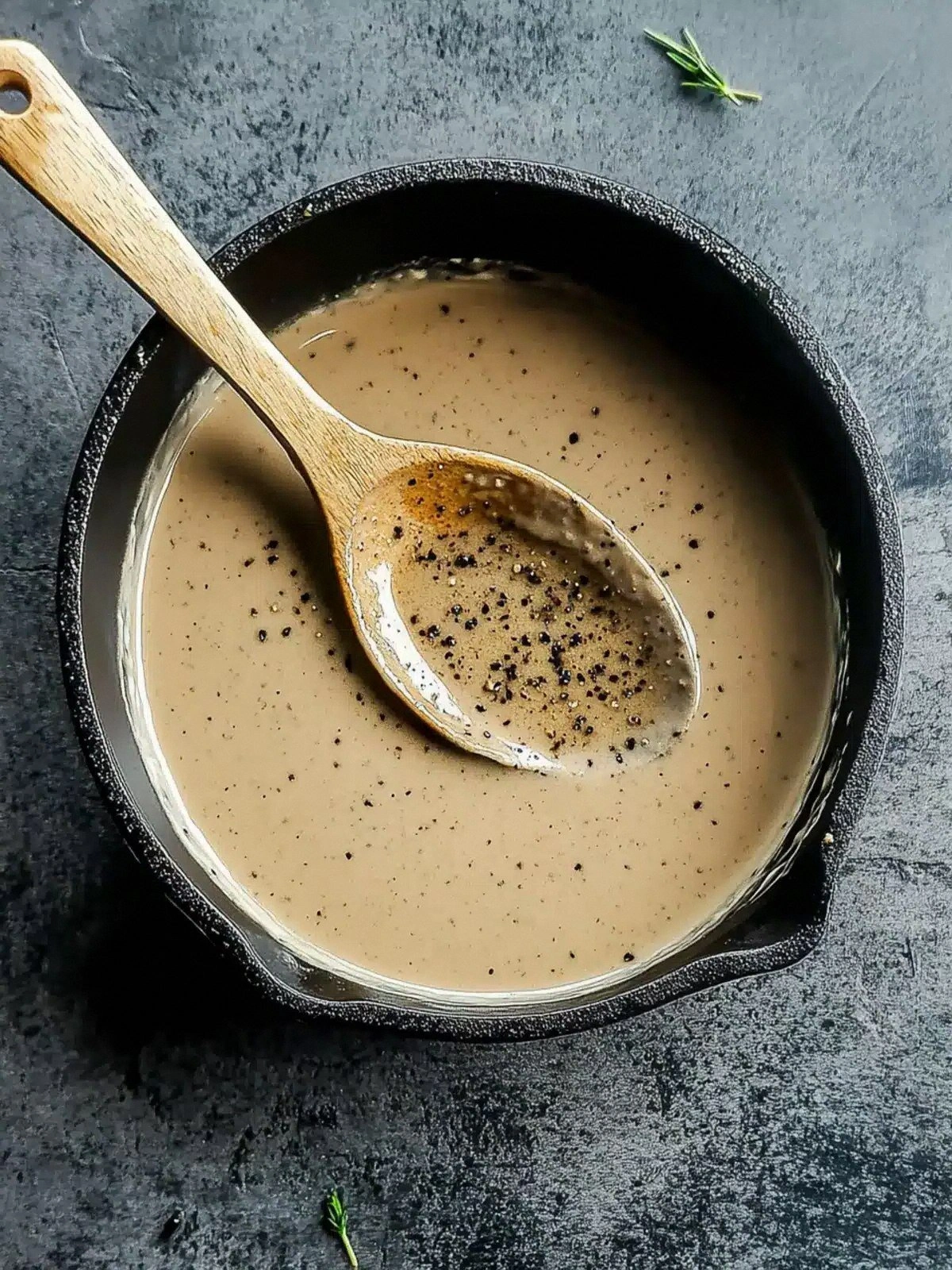
- Remove the pan from heat and let the sauce sit for a minute to allow the flavors to meld. The sauce should feel velvety, slightly thick, and fragrant. If you’re serving immediately, pour it over your chosen dish and garnish with a few extra peppercorns for visual appeal. The sauce is now ready to impress.
- Serve hot over pasta, steak, or roasted vegetables. The sauce should coat each bite, creating a harmonious blend of savory, sweet, and peppery notes. If you’re plating, drizzle a little extra sauce over the top and sprinkle fresh parsley for that final flourish. You’ve just created a dish that’s sure to wow anyone who tastes it.
That’s it—you did it. But hold on, I’ve got a few more tricks that’ll take this sauce to another level. Stay with me here—this is worth it.
Insider Tricks for Flawless Results
The Temperature Rule Nobody Follows
Many cooks keep the heat on high throughout the process, which can scorch the butter and create a bitter taste. Keep the heat medium or low once the butter is melted, especially during the brandy flambé and the reduction stages. This subtle temperature control preserves the delicate flavors and prevents the sauce from becoming too thick.
Why Your Nose Knows Best
Before you add the brandy, take a quick sniff of the sautéed shallots. A sweet, caramelized aroma signals that the shallots are ready. If the smell is sharp or bitter, let them cook a bit longer. Your nose is the ultimate flavor guide, so trust it.
The 5-Minute Rest That Changes Everything
After the sauce has finished cooking, let it rest for five minutes off the heat. This pause allows the peppercorns to settle and the flavors to marry. I’ve seen sauces that were rushed finish off as watery; a short rest fixes that.
Add a Touch of Acid
A splash of lemon juice or a dash of white wine vinegar at the end brightens the sauce, cutting through the richness. If you’re serving with steak, this acidity balances the meat’s fat. Try adding a teaspoon of lemon juice just before serving.
Use Fresh Peppercorns for Intensity
Pre‑crushed peppercorns lose their aroma quickly. Crush the peppercorns right before adding them to the sauce for maximum flavor. A mortar and pestle are ideal for this task, ensuring the peppercorns release their oils without becoming mushy.
Creative Twists and Variations
This recipe is a playground. Here are some of my favorite ways to switch things up:
Lemon‑Zest Peppercorn
Add a tablespoon of fresh lemon zest to the sauce for a bright, citrusy kick that pairs well with chicken or fish. The lemon zest brings a fresh note that cuts through the richness.
Smoky Chipotle Peppercorn
Replace the mixed peppercorns with a teaspoon of chipotle peppercorns for a smoky, slightly sweet flavor. This variation works beautifully with grilled pork or roasted sweet potatoes.
Herb‑Infused Variation
Add a handful of fresh thyme or rosemary during the reduction stage. The herbs infuse the sauce with an earthy aroma that elevates roasted chicken or lamb.
Creamy Mushroom Peppercorn
Sauté sliced mushrooms with the shallots before adding the brandy. The mushrooms contribute umami and a hearty texture, making the sauce perfect for vegetarian dishes.
White Wine Swap
Use dry white wine instead of brandy for a lighter, fruitier sauce. The wine adds a subtle acidity that complements seafood and light pasta dishes.
Low‑Fat Version
Replace heavy cream with a half‑and‑half or Greek yogurt for a lighter sauce that still delivers creaminess. This version is great for those watching calories.
Storing and Bringing It Back to Life
Fridge Storage
Transfer the sauce to an airtight container and store it in the refrigerator for up to 3 days. The sauce will thicken slightly as it cools, so reheat gently and stir well before serving.
Freezer Friendly
For longer storage, freeze the sauce in a freezer‑safe container for up to 2 months. Thaw overnight in the refrigerator and reheat slowly over low heat, adding a splash of water or stock to loosen the consistency.
Best Reheating Method
When reheating, bring the sauce to a gentle simmer on low heat, stirring frequently. Add a tiny splash of water before reheating—it steams back to perfection, restoring the sauce’s silky texture.