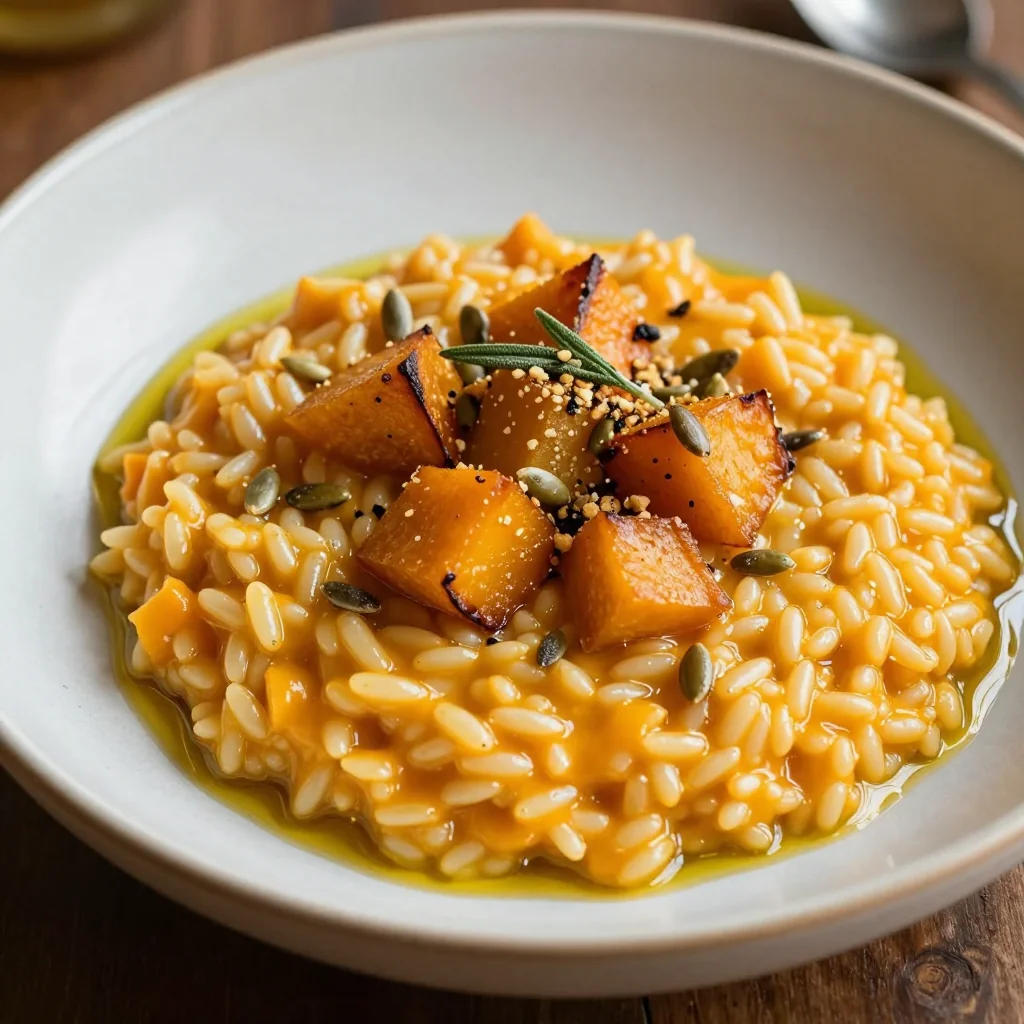
Love this? Pin it for later! 📌
Why This Recipe Works
- Perfect Texture Every Time: The combination of roasted squash purée and traditional risotto technique creates an unbelievably creamy texture without any heavy cream
- Restaurant-Quality at Home: Professional techniques broken down into simple steps that guarantee success even for risotto beginners
- Make-Ahead Friendly: Most components can be prepped in advance, making this perfect for entertaining without the last-minute stress
- Nutritional Powerhouse: Butternut squash provides vitamins A and C, while the slow-release carbs from arborio rice keep you satisfied for hours
- Versatile Year-Round: Equally perfect for a cozy weeknight dinner or your holiday table—just garnish accordingly
- Leftover Magic: Transform any leftovers into arancini (risotto balls) or use as a stuffing for roasted bell peppers
- Customizable Comfort: Easily adapt for vegan, gluten-free, or dairy-free diets without sacrificing the creamy texture
Ingredients You'll Need
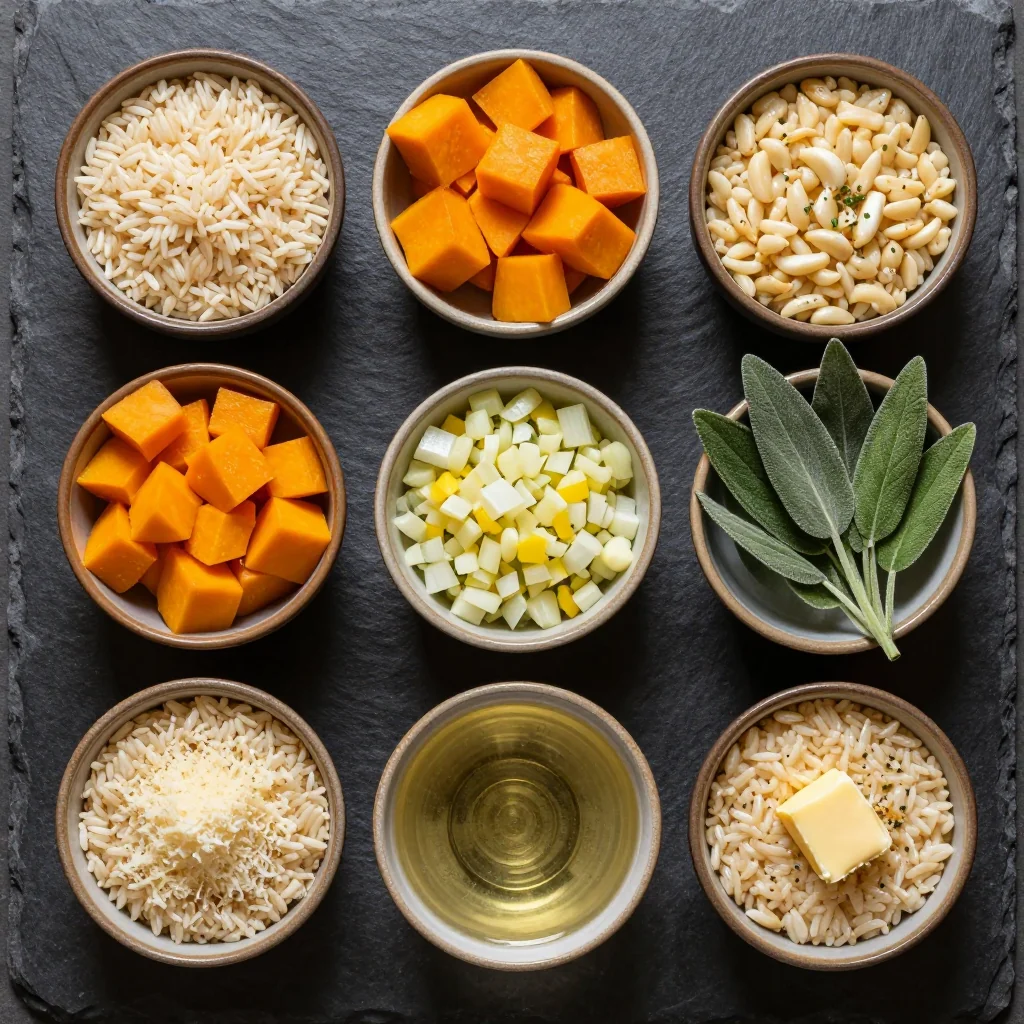
Great risotto starts with great ingredients, and I've spent years perfecting this combination. Each component plays a crucial role in creating the final harmony of flavors and textures. Let me walk you through what to look for and why each ingredient matters.
Butternut Squash (2½ pounds) - The star of our show! Look for squash with a matte (not shiny) skin, which indicates ripeness. The neck should feel heavy for its size, and the skin should be free from soft spots or cracks. I prefer medium-sized squash—about 2-3 pounds—because they're easier to handle and have the perfect flesh-to-seed ratio. Pro tip: many grocery stores sell pre-peeled and cubed butternut squash if you're short on time, though the flavor won't be quite as vibrant.
Arborio Rice (1½ cups) - This short-grain Italian rice is non-negotiable for authentic risotto. Its high starch content creates that signature creaminess. While Carnaroli or Vialone Nano work in a pinch, Arborio is most readily available and forgiving for beginners. Always buy from a store with high turnover—older rice won't release starch as effectively. Store any unused rice in an airtight container in a cool, dark place.
Vegetable Broth (6 cups) - The foundation of flavor! Use a high-quality broth or make your own. If using store-bought, choose low-sodium so you can control the saltiness. Warm broth is essential—cold broth will shock the rice and prevent proper starch release. I keep mine at a gentle simmer in a separate pan throughout the cooking process.
Parmesan Cheese (1 cup freshly grated) - Never, ever use the pre-grated stuff from a green can. Fresh Parmigiano-Reggiano will transform your risotto from good to extraordinary. The nutty, salty complexity is irreplaceable. Grate it yourself using the fine side of a box grater or microplane. Save the rind in your freezer—it's perfect for flavoring soups and sauces.
White Wine (½ cup) - A dry white wine like Pinot Grigio or Sauvignon Blanc adds acidity and depth. The alcohol cooks off, leaving behind complex flavors that brighten the rich squash. If you don't cook with wine, substitute with an equal amount of broth plus 1 tablespoon of white wine vinegar or fresh lemon juice.
Shallots (2 medium) - Sweeter and more refined than onions, shallots provide a subtle aromatic base without overwhelming the delicate squash. Look for firm, dry shallots with no sprouting. If unavailable, substitute with half a small onion plus one garlic clove.
Fresh Sage (6-8 leaves) - This woody herb is butternut squash's best friend. Its earthy, slightly peppery flavor bridges the gap between sweet and savory. Fresh is essential here—dried sage has a completely different profile. If you can't find fresh sage, substitute with fresh thyme or rosemary, though the flavor will change.
Unsalted Butter (4 tablespoons) - European-style butter with higher fat content (like Kerrygold) creates a richer, more luxurious finish. We use it both for sautéing and for the final mantecatura (the Italian technique of vigorous stirring with cold butter and cheese for extra creaminess).
How to Make Creamy Butternut Squash Risotto That Warms Your Soul
Roast the Butternut Squash
Preheat your oven to 425°F (220°C). Peel the butternut squash, remove seeds, and cut into 1-inch cubes. Toss with 2 tablespoons olive oil, 1 teaspoon salt, and ½ teaspoon black pepper on a large rimmed baking sheet. Spread in a single layer—crowding will cause steaming instead of roasting. Roast for 25-30 minutes, turning once halfway through, until the edges are caramelized and the centers are tender when pierced with a fork.
Pro tip: Don't rush this step! The caramelization adds incredible depth of flavor. Those browned edges are liquid gold.
Create the Squash Purée
Transfer 2 cups of the roasted squash to a blender or food processor. Add ¼ cup of the warm vegetable broth and blend until completely smooth and silky. Set aside both the purée and the remaining roasted squash cubes (you'll fold these in later for texture contrast). This dual approach—purée for creaminess and chunks for bite—creates the perfect textural experience.
Make-ahead tip: The purée can be made up to 3 days in advance and refrigerated in an airtight container.
Warm the Broth
In a medium saucepan, bring the vegetable broth to a gentle simmer over medium heat. Reduce heat to low to maintain a steady simmer. This is crucial—adding cold broth to the rice will shock it and prevent the proper release of starch that creates risotto's signature creaminess. Keep a ladle handy for easy addition throughout the cooking process.
Flavor boost: Add the sage stems to the simmering broth for an extra layer of herbaceous flavor.
Sauté the Aromatics
In a heavy-bottomed Dutch oven or large sauté pan, heat 2 tablespoons butter over medium heat. When the foam subsides, add the minced shallots. Cook for 2-3 minutes until translucent but not browned. Add the minced garlic and sage leaves, cooking for another 30 seconds until fragrant. The shallots should melt into the butter, creating a flavorful base.
Watch carefully: Garlic burns quickly and becomes bitter—30 seconds is all you need!
Toast the Rice
Add the arborio rice to the pan and stir constantly for 2 minutes until each grain is coated with butter and the edges become translucent with a tiny white center. This step, called tostatura, seals the rice and prevents it from becoming mushy. You'll know it's ready when the rice smells slightly nutty and makes a gentle clicking sound against the pan.
Don't skip this step: It's essential for achieving the perfect al dente texture in the finished risotto.
Deglaze with Wine
Pour in the white wine and stir constantly until it's almost completely absorbed. The wine's acidity brightens the dish and helps lift any flavorful bits from the pan bottom. If you're not using wine, add ½ cup of warm broth with 1 tablespoon of lemon juice instead. The mixture should bubble gently but not vigorously.
Wine tip: Use a wine you'd happily drink—if it doesn't taste good in the glass, it won't taste good in your risotto!
The Gradual Addition
Begin adding the warm broth one ladleful (about ½ cup) at a time, stirring almost constantly. Wait until each addition is mostly absorbed before adding the next. This process takes 18-20 minutes total. The constant stirring agitates the rice grains, releasing their starch and creating the creamy sauce. Maintain a gentle simmer—too vigorous and the liquid evaporates before the rice cooks.
Patience pays off: Don't try to rush by adding too much broth at once—it won't work!
Introduce the Squash Purée
After about 12 minutes of adding broth, when the rice is about two-thirds cooked but still quite firm, stir in the butternut squash purée. This timing allows the squash to integrate fully while maintaining its vibrant color. Continue adding broth as needed, stirring constantly. The purée will tint the risotto a beautiful golden-orange hue.
Color check: If your purée seems too thick, thin it with a bit of warm broth before adding to the rice.
Test for Doneness
Begin tasting the rice after about 16 minutes. It should be al dente—tender with a slight firmness in the center. The risotto should flow like lava when you tilt the pan, neither too thick nor too soupy. If it mounds up stiffly, add a bit more broth. If it's soupy, continue cooking for a minute or two longer.
Perfect consistency: When you drag your spoon through the pan, the risotto should slowly flow to fill the space.
The Mantecatura
Remove the pan from heat and immediately stir in the remaining 2 tablespoons cold butter, grated Parmesan, and reserved roasted squash cubes. Stir vigorously for 30 seconds until the butter melts and creates an extra glossy finish. This Italian technique, called mantecatura, takes your risotto from good to restaurant-quality. The cold butter emulsifies with the starch, creating an incredibly silky texture.
Final flourish: Add a handful of chopped fresh sage and a few gratings of fresh nutmeg for the ultimate autumn flavor.
Expert Tips
Temperature Control
Keep your broth at a gentle simmer throughout cooking. Cold broth will shock the rice and prevent proper starch release, while boiling broth can cause the rice to cook unevenly.
Timing Matters
Risotto waits for no one! Have all your ingredients prepped and your serving bowls warmed before you start. The final texture is best enjoyed immediately.
Stirring Technique
Stir in a figure-eight pattern, reaching the edges of the pan. This prevents sticking and ensures even cooking while releasing maximum starch from the rice.
Broth Quantity
You might not need all 6 cups of broth, or you might need more. Broth absorption depends on your stove, pan, and even the humidity. Trust your instincts!
Butter Temperature
Use cold butter for the mantecatura. This creates a better emulsion and gives you that restaurant-quality glossy finish that makes risotto so luxurious.
Salt Timing
Add salt only after the risotto is nearly done. The broth reduces as you cook, concentrating its saltiness. Taste and adjust seasoning at the end.
Variations to Try
Vegan Delight
Replace butter with high-quality olive oil and use nutritional yeast instead of Parmesan. Add 2 tablespoons of cashew cream for extra richness.
Protein Power
Fold in seared scallops or shrimp during the final step. For a vegetarian option, top with crispy fried sage leaves and toasted pumpkin seeds.
Mushroom Medley
Add sautéed wild mushrooms along with the squash purée. Use mushroom broth instead of vegetable broth for an umami bomb.
Spiced Version
Add ½ teaspoon each of ground cinnamon and nutmeg when sautéing the aromatics. Finish with crispy pancetta for a sweet-savory combination.
Storage Tips
Important Note
Risotto is always best served immediately. However, if you must store leftovers, here's how to maintain the best quality possible.
Refrigeration: Store cooled risotto in an airtight container in the refrigerator for up to 3 days. The texture will thicken considerably as it cools. To reheat, add the risotto to a pan with a splash of broth or water over medium heat, stirring until warmed through and creamy again. You may need to add more liquid than you think—the rice will absorb quite a bit.
Freezing: While not ideal, you can freeze risotto in portions for up to 1 month. Thaw overnight in the refrigerator, then reheat as above. The texture won't be quite as creamy, but it's still delicious. Consider using thawed risotto to make arancini (risotto balls) by mixing with an egg, forming into balls, breading, and frying until golden.
Make-Ahead Components: You can roast the butternut squash and make the purée up to 3 days ahead. Warm the purée before adding to the risotto. You can also grate the Parmesan and mince the aromatics ahead of time, storing them separately in the refrigerator.
Frequently Asked Questions
Gluey risotto usually results from overcooking or using too much liquid. Remember, risotto should flow like lava, not stand up in a mound. Also, ensure you're using the correct rice—long-grain varieties won't release starch properly. Finally, don't skip the mantecatura step at the end!
Absolutely! Replace the wine with an equal amount of warm vegetable broth plus 1 tablespoon of white wine vinegar or fresh lemon juice. The acid is crucial for brightness—it balances the richness of the squash and cheese.
A heavy-bottomed sauté pan or Dutch oven works best. The heavy bottom distributes heat evenly, preventing hot spots that can burn your risotto. Avoid non-stick pans—they prevent the rice from properly releasing starch. The pan should be wide rather than deep to maximize evaporation.
Yes! Acorn, kabocha, or sugar pumpkin all work beautifully. Each will impart slightly different sweetness levels and textures. Kabocha squash is particularly lovely—it has an almost chestnut-like flavor when roasted.
The rice should be al dente—tender with a slight firmness in the center. The overall consistency should be creamy and loose, not thick. When you tilt the pan, the risotto should slowly flow like lava. If you drag a spoon through it, the risotto should slowly fill in the space.
Constant stirring serves two purposes: it prevents the rice from sticking and burning, and it agitates the grains to release their starch. This released starch creates the creamy sauce that defines great risotto. Think of it as a meditation—you can't rush perfection!
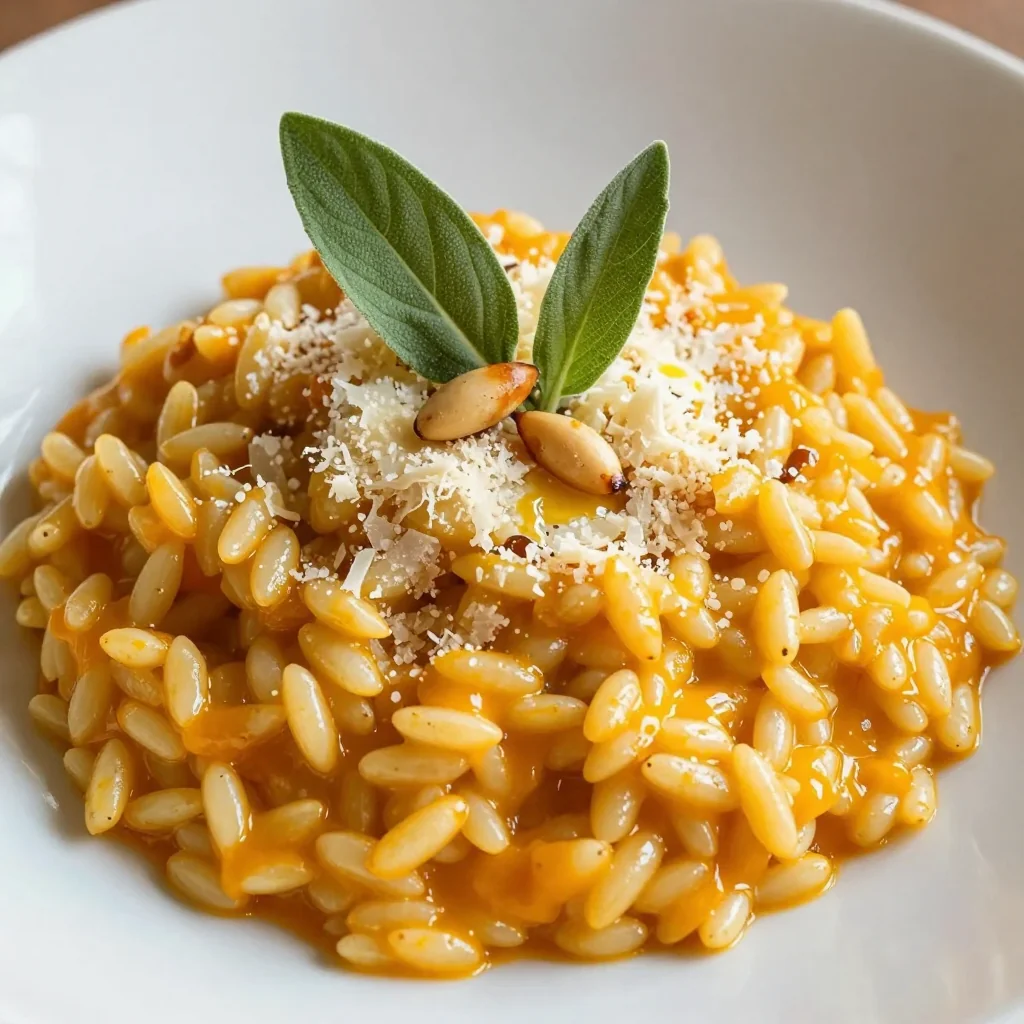
Creamy Butternut Squash Risotto That Warms Your Soul
Ingredients
Instructions
- Roast the squash: Preheat oven to 425°F. Toss squash with 2 tablespoons olive oil, salt, and pepper. Roast 25-30 minutes until caramelized.
- Make the purée: Blend 2 cups roasted squash with ¼ cup warm broth until smooth. Reserve remaining squash cubes.
- Start the risotto: Warm broth in a separate pan. In a Dutch oven, sauté shallots in 2 tablespoons butter until translucent.
- Add aromatics: Stir in garlic and sage, cook 30 seconds. Add rice, toast 2 minutes until edges are translucent.
- Deglaze: Add wine, stir until absorbed. Begin adding warm broth one ladleful at a time, stirring constantly.
- Add squash: After 12 minutes, stir in squash purée. Continue adding broth and stirring.
- Finish: After 18-20 minutes, when rice is al dente, remove from heat. Stir in remaining butter, Parmesan, and reserved squash.
- Serve: Spoon into warm bowls, grate fresh nutmeg on top, and serve immediately with additional Parmesan.
Recipe Notes
Risotto is best served immediately. If you must reheat, add a splash of broth or water and warm gently on the stove, stirring until creamy again. For a vegan version, substitute butter with olive oil and use nutritional yeast instead of Parmesan.