Love this? Pin it for later! 📌
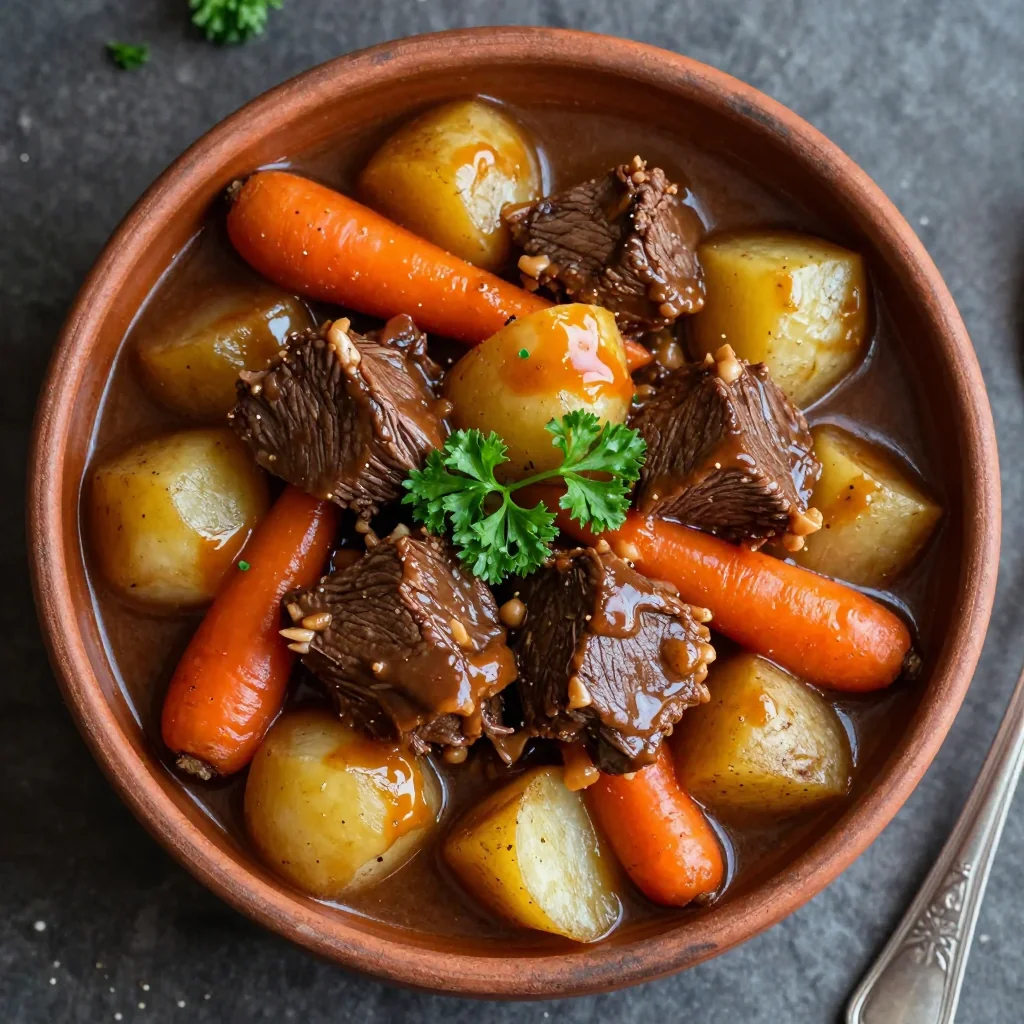
There’s a certain kind of magic that happens when the temperature drops below freezing and the snow starts to swirl against the kitchen window. The world outside feels sharp and unforgiving, but inside, the oven is humming, the Dutch oven is heavy with promise, and the scent of beef and root vegetables slowly braising in a thyme-kissed broth wraps around you like your favorite wool blanket. This is the stew I make every January without fail—partly because my grocery budget is still recovering from December, and partly because nothing else tastes quite like survival and comfort in the same spoonful.
I started making this particular version during the year we bought our first house. The furnace couldn’t quite keep up with the polar vortex, so the kitchen became the warmest room in the home. I’d stand at the stove, hands curled around a chipped enamel mug of coffee, while cheap beef chuck—tough as my dad’s old boots—softened into velvet strands. Carrots, parsnips, and potatoes swam in a broth that turned glossy with collagen. The first bowl felt like a down-payment on happiness; the leftovers tasted even better after a 12-hour shift when the only thing I had energy for was microwaving and fuzzy socks.
Nearly a decade later, the furnace is reliable, but the stew is still January’s love letter to my future self. It costs less than a drive-thru dinner for four, feeds a crowd (or feeds two people three times), and makes the house smell like you’ve got your life together—even if the only thing you’ve accomplished today is chopping vegetables while dancing to 90s R&B.
Why This Recipe Works
- Budget-Smart Cuts: Tough chuck roast becomes fork-tender after low-and-slow simmering, giving restaurant richness for pennies on the dollar.
- Root-Veg Power: Potatoes, carrots, parsnips, and turnips stay under $1/lb in winter and naturally thicken the stew as they break down.
- One-Pot Wonder: From searing to serving, everything happens in a single Dutch oven—less dishes, more couch time.
- Freezer Hero: Make a double batch; freeze half flat in zip bags for a zero-effort dinner on the next arctic night.
- Flavor Overnight: The stew tastes even better the second day as the broth absorbs all the aromatics.
- Customizable: Swap veggies, add lentils, or brighten with frozen peas—this recipe is a template, not a tyrant.
Ingredients You'll Need
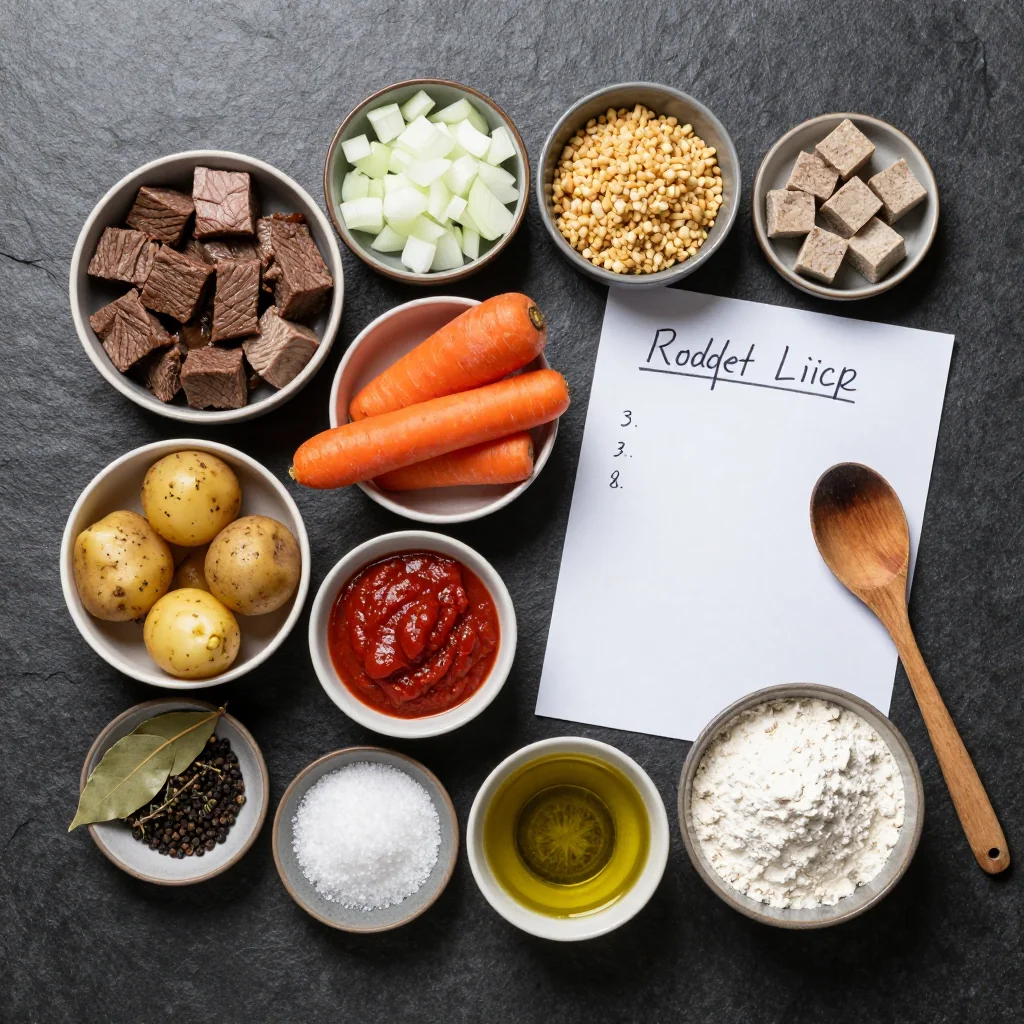
Below are the humble players that turn into a velvet-rich stew. I’ve listed my favorite supermarket finds and the cheapest substitutes that still deliver big flavor.
Beef Chuck Roast (2 ½ lbs): Look for a slab marbled with thin white veins—intramuscular fat equals flavor. If chuck is overpriced, round roast or even stew beef cubes on sale work; just plan on an extra 20 minutes simmer time. Trim only the large, hard fat pockets; leave the rest for self-basting magic.
Flour (⅓ cup): Plain all-purpose is fine. Tossing the beef in flour before searing creates crusty edges and later thickens the broth. For gluten-free, substitute 3 tablespoons cornstarch mixed with the beef stock.
Oil (2 Tbsp): Any neutral high-heat friend—canola, sunflower, peanut. Save pricey olive oil for finishing; it can turn bitter under prolonged heat.
Yellow Onion (1 large): The aromatic backbone. If onions make you weep, substitute two fat leeks—wash well to remove sandy grit.
Garlic (4 cloves): Freshly minced. Jarlic works in a pinch, but fresh is pennies and perfume.
Tomato Paste (2 Tbsp): Buy the tube if you can; it lives forever in the fridge and eliminates half-used cans languishing next to the pickles.
Beef Stock (4 cups): Opt for low-sodium so you control salt. In a hurry, 3 cups water plus 1 cup strong coffee adds surprising depth. (Trust me—coffee’s bitter compounds marry with beef like they were born to tango.)
Worcestershire Sauce (1 Tbsp): Umami bomb. Soy sauce plus a pinch of sugar stands in nicely.
Thyme (1 tsp dried or 3 sprigs fresh): Woodsy and winter-perfect. No thyme? Use ½ tsp rosemary or a bay leaf—just remember to fish the bay out before serving.
Root Vegetables:
- Potatoes (1 ½ lbs): Russets dissolve slightly and thicken, while waxy reds hold their shape—use whichever you have. No peeling necessary if skins are thin.
- Carrots (4 medium): Buy the bagged “juice” carrots; they’re cheaper than pretty bunches and taste identical once simmered.
- Parsnips (2): Candy-sweet after braising. If unavailable, swap in more carrots or half a sweet potato.
- Turnip or Rutabaga (½ lb): Peppery undertone keeps the stew from tasting one-note. Peel the waxy skin with a knife—vegetable peelers struggle.
Salt & Pepper: Kosher salt for seasoning layers, cracked pepper for finishing bite.
How to Make Budget-Friendly Beef and Root Vegetable Stew for Cold January Evenings
Pat, Cube, and Flour the Beef
Start by blotting the chuck roast with paper towels—moisture is the enemy of a golden crust. Slice into 1½-inch cubes, keeping pieces uniform so they cook evenly. Place in a bowl, sprinkle with flour, 1 tsp salt, and ½ tsp pepper; toss until every cube wears a light jacket. This will later thicken the stew and give those irresistible crusty edges.
Sear Until Deep Brown
Heat oil in a Dutch oven over medium-high until it shimmers like a mirage. Add beef in a single layer—don’t crowd or it will steam. Let it sit undisturbed 2½ minutes per side. When you see a chestnut crust forming, flip once. Transfer seared cubes to a plate; repeat with remaining meat. Those browned bits (fond) on the bottom? Liquid gold—do not wash the pot!
Build the Aromatic Base
Lower heat to medium; toss in diced onion and a pinch of salt. Stir, scraping the fond, until onions turn translucent and pick up a bronze edge—about 4 minutes. Add garlic and tomato paste; cook 1 minute until the paste darkens to brick red. The kitchen should smell like Sunday at grandma’s.
Deglaze and Simmer
Pour in 1 cup beef stock; use a wooden spoon to lift every browned speck. Return beef and any juices, then add remaining stock, Worcestershire, and thyme. Bring to a gentle boil; immediately reduce to the laziest simmer—just occasional bubbles. Cover and let the alchemy begin.
Add Veggies in Tiers
After 45 minutes, slide in potatoes and turnips—these need the longest. At 75 minutes, add carrots and parsnips. Keeping them staggered prevents mushy carrots and crunchy potatoes. Continue simmering 30–40 minutes until beef yields to gentle fork pressure.
Test, Taste, and Season
Fish out a cube of beef and a potato; both should be tender. If resistance remains, cover and simmer another 10 minutes. Taste broth: add salt gradually—stews concentrate salinity as they reduce. A final crack of black pepper and you’re ready to ladle.
Rest for Maximum Flavor
If time allows, cool and refrigerate overnight. Fat will solidify on top; lift most off for a leaner stew, but leave a teaspoon for sheen. Gently reheat over low; the broth will have turned velvety and complex. Serve in deep bowls with crusty bread for sopping.
Expert Tips
Low and Slow Wins
Resist cranking the heat; rapid boils make beef seize and toughen. Maintain a gentle simmer where bubbles barely break the surface.
Too Thick? Too Thin?
Whisk 1 Tbsp flour with ¼ cup cold water; stir into simmering stew for extra body. For thinner broth, splash in hot stock or strong coffee.
Overnight Miracle
Stew always tastes richer the next day as collagen sets into a soft gel. Make on Sunday; portion into mason jars for grab-and-go weekday lunches.
Save the Bones
If your chuck roast comes with a bone, toss it into the pot; marrow adds silkiness. Remove before serving.
Flash-Freeze Portions
Ladle cooled stew into quart zip bags; press flat to freeze. They stack like books and thaw in under 10 minutes under warm water.
Last-Minute Brightness
Just before serving, stir in a handful of frozen peas or a teaspoon of lemon zest to lift the rich, earthy flavors.
Variations to Try
- Irish Twist: Swap 1 cup stock for dark stout and add sliced cabbage in the final 10 minutes.
- Harvest Ale: Use sweet potatoes and butternut squash, plus a sprig of sage.
- Mushroom Lovers: Add 8 oz cremini mushrooms sautéed in butter for an umami double-down.
- Lentil Stretcher: Stir in ½ cup green lentils with the potatoes to double fiber and halve meat cost.
- Smoky Heat: Add 1 chipotle in adobo, minced, plus ½ tsp smoked paprika for a spicy hug.
Storage Tips
Refrigerator: Cool completely, transfer to airtight containers, and refrigerate up to 4 days. Reheat gently over low, adding splashes of broth or water to loosen.
Freezer: Portion into freezer bags, press out air, label, and freeze up to 3 months. Thaw overnight in the fridge or use the microwave’s defrost setting. Reheat to 165°F (74°C).
Make-Ahead: The stew can be prepped through Step 4, cooled, and refrigerated up to 2 days. When ready, skim solidified fat, return to Dutch oven, bring to simmer, and continue with Step 5.
Frequently Asked Questions
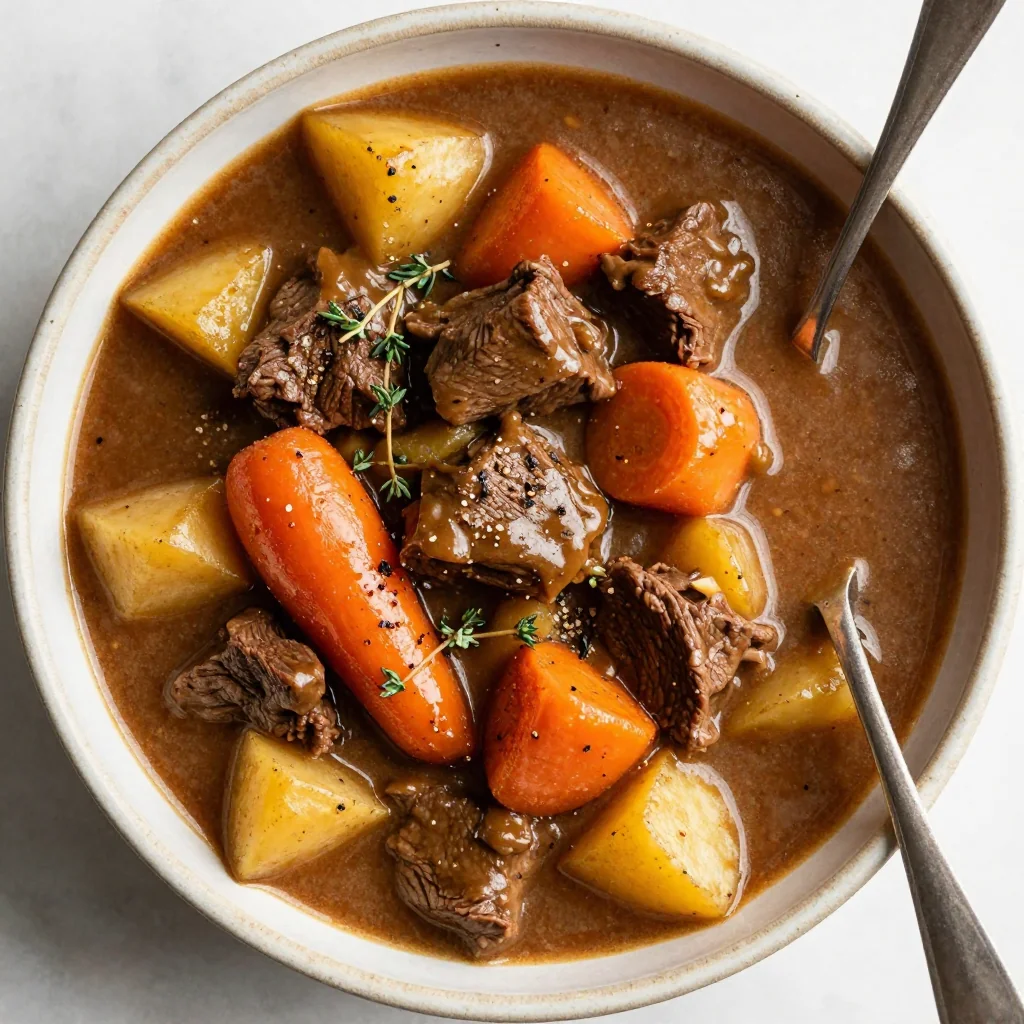
Budget-Friendly Beef and Root Vegetable Stew for Cold January Evenings
Ingredients
Instructions
- Prep Beef: Pat cubes dry, season with flour, 1 tsp salt, and ½ tsp pepper; toss to coat.
- Sear: Heat oil in Dutch oven over medium-high. Brown beef in batches, 2½ min per side. Remove to plate.
- Aromatics: Lower heat; sauté onion 4 min. Add garlic and tomato paste; cook 1 min.
- Deglaze: Add 1 cup stock; scrape browned bits. Return beef and juices; add remaining stock, Worcestershire, and thyme. Simmer gently, partially covered, 45 min.
- Add Veggies: Stir in potatoes and turnip; cook 30 min. Add carrots and parsnips; cook 30–40 min more until beef is fork-tender.
- Season & Serve: Taste; adjust salt and pepper. Let rest 10 minutes (or overnight) and reheat to serve.
Recipe Notes
Stew thickens as it stands; thin with stock when reheating. Flavor peaks on day two—perfect for Sunday meal prep.