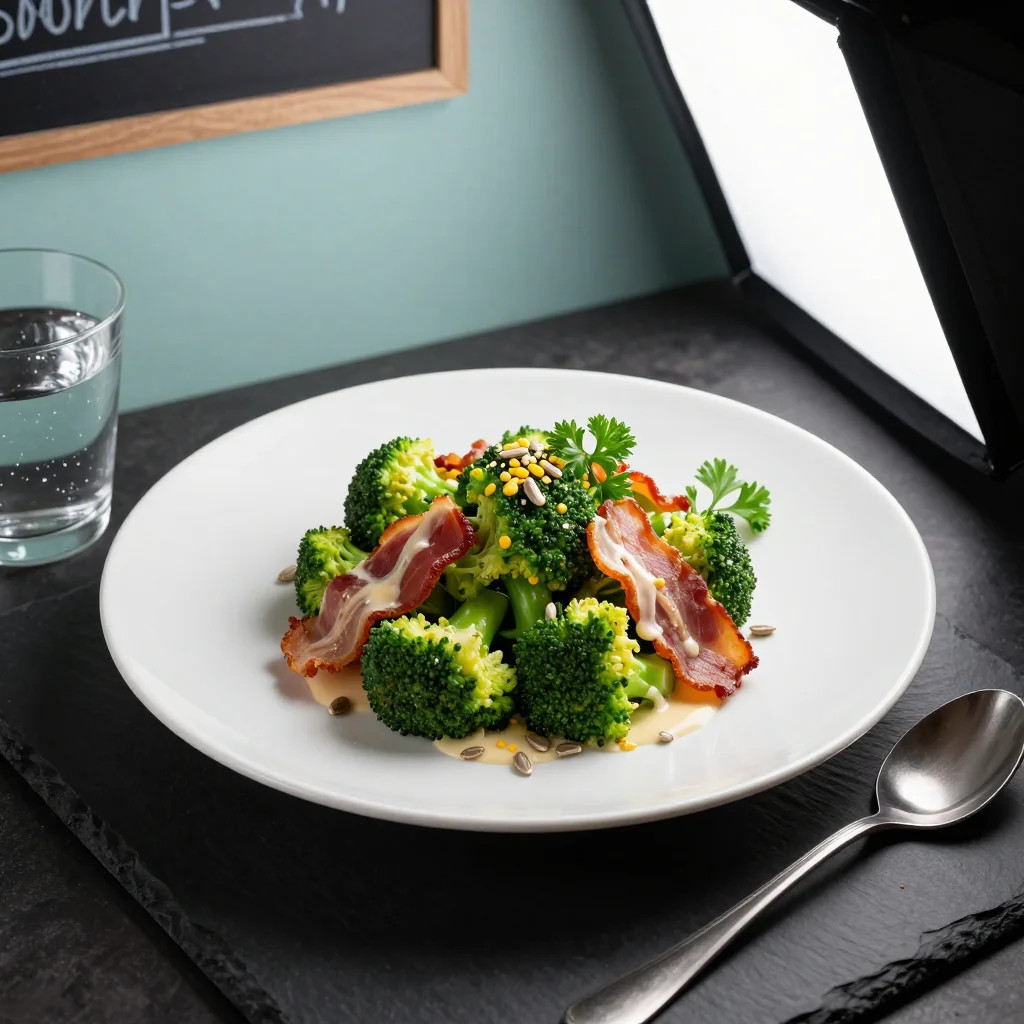
I was in a frantic rush to impress my roommate after a wild night out, and the only thing on my mind was a quick dinner that still tasted like a five‑star restaurant. I grabbed a salmon fillet, a bag of rice, and a splash of soy sauce, hoping the combination would work. Instead of a bland stir‑fry, the fish came out glossy, the rice fluffy, and a sauce that made my taste buds dance. That moment felt like a culinary epiphany, a reminder that the simplest ingredients can create fireworks. I knew I had stumbled on something that deserved a proper write‑up.
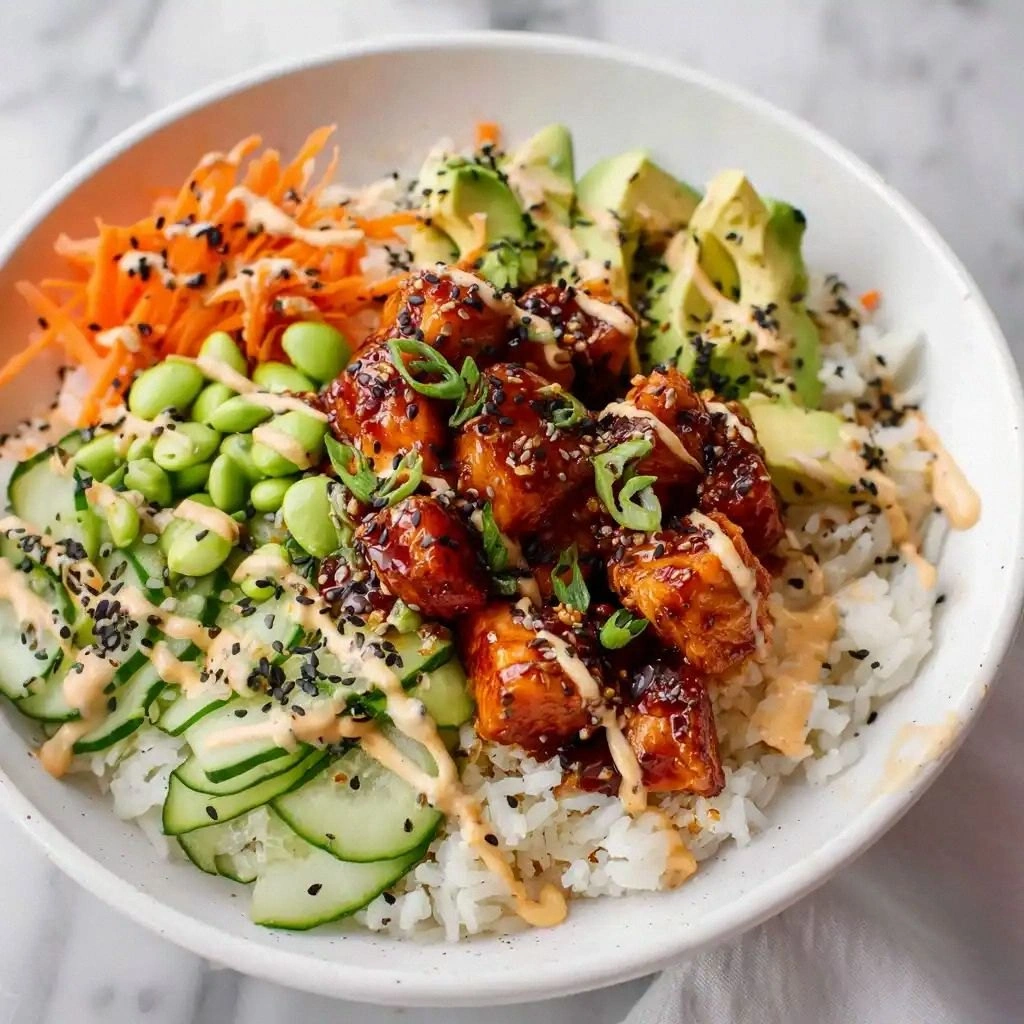
Picture the kitchen: the steam from the pot swirling like a gentle fog, the scent of sesame oil frying, and the subtle crackle of the pan as the salmon sizzles. The salmon’s skin crisps into a golden lace, while the rice stays light and airy, each grain standing proud like a tiny flag. The avocado, sliced thin, releases a buttery aroma that mingles with the sharp tang of lime. When the first spoonful hits your tongue, the creamy mayo glazes the fish like velvet, and the chili crisp shivers against your palate. The final garnish of sesame seeds adds a satisfying snap, turning the bowl into a symphony of textures.
This version is a game‑changer because it marries the umami depth of salmon with a sauce that is simultaneously sweet, spicy, and silky. The key is the creamy sesame mayo, which coats the fish like a velvet cloak and balances the heat from the sriracha. The crunch from edamame and cucumber provides a refreshing counterpoint that keeps the dish from feeling heavy. And the finish? A drizzle of chili crisp that bursts with umami, a sprinkle of seaweed snacks for that oceanic whisper, and a swirl of lime that brightens everything. I dare you to taste this and not go back for seconds.
Most recipes get this completely wrong, especially when they forget the sauce’s role as the star. I’ve discovered that a single tablespoon of honey can turn an ordinary mayo into a golden glaze that sings. And the next trick? A quick flash of garlic powder in the pan to lock in flavor before the salmon hits the heat. Picture yourself pulling this out of the pan, the whole kitchen smelling incredible, and the bowl looking like a piece of edible art. Let me walk you through every single step — by the end, you'll wonder how you ever made it any other way.
What Makes This Version Stand Out
- Flavor: The sauce is a layered masterpiece, where sweet honey, spicy sriracha, and savory soy sauce intertwine to create a depth that feels both comforting and adventurous.
- Texture: Every bite delivers a contrast: the crisp skin of salmon, the tender rice, the crunchy cucumber, and the smooth avocado, all harmonized by the silky mayo.
- Visual Appeal: The bright green of cucumber and avocado against the salmon’s golden hue, crowned with a dusting of sesame seeds, makes the dish Instagram‑ready from the first glance.
- Convenience: With only a handful of ingredients and a single pan, this bowl is a 15‑minute wonder that feels like a gourmet experience.
- Versatility: Swap the salmon for shrimp or tofu and the dish remains a crowd‑pleaser, making it a go‑to for any protein preference.
- Health Boost: The combination of omega‑3 rich salmon, fiber‑laden edamame, and fresh vegetables keeps the meal balanced yet indulgent.
- Make‑Ahead Friendly: The rice and sauce can be prepared a day ahead, and the salmon can be marinated and stored, saving precious kitchen time.
- Social Impact: The dish’s simplicity means fewer wasted ingredients, and the use of seaweed snacks encourages mindful snacking.
Inside the Ingredient List
The Flavor Base
The foundation of this bowl starts with the salmon, seasoned with soy sauce, sesame oil, garlic powder, salt, and black pepper. The soy sauce brings umami, while the sesame oil adds a nutty aroma that lingers in the air. Garlic powder is a subtle nod to the Japanese palate, giving the fish a gentle depth without overpowering the freshness. Salt and pepper balance the flavors, ensuring the fish doesn’t taste flat or too salty. Skipping the seasoning would turn the dish into a bland canvas; the fish would lack that essential savory backbone.
When you’re marinating, let the salmon rest for at least 10 minutes; this allows the flavors to penetrate the flesh. If you’re in a hurry, a quick 2‑minute rub will still deliver a noticeable difference. For those who love a bit of heat, add a pinch of red pepper flakes to the seasoning mix. A good rule of thumb is to keep the seasoning light so the salmon’s natural sweetness shines through. Always taste the seasoning before cooking; it’s the first step to mastering this bowl.
The Texture Crew
Rice is the silent hero that holds everything together. Cook the rice in a rice cooker or on the stove until it’s fluffy yet slightly firm. The grains should be separate, not clumped, so each bite has a satisfying bite. If you prefer a firmer bite, reduce the water slightly; if you want a softer texture, add a splash of water. A good tip: let the rice rest for 10 minutes after cooking to lock in moisture.
Edamame and shredded carrots bring a pop of color and crunch. The edamame adds a subtle bean flavor that pairs well with the fish, while the carrots introduce a sweet undertone. Both should be pre‑cooked or steamed to ensure they’re tender but still crisp. If you’re short on time, frozen edamame can be tossed directly into the pan. The key is to keep them bright green, which signals freshness and visual appeal.
The Unexpected Star
Avocado isn’t just a garnish; it’s a creamy counterpoint that softens the heat from the sriracha. Slice it thinly so it melts into the bowl, creating a silky texture that contrasts the salmon’s crisp skin. The lime juice adds a zesty brightness that lifts the entire dish, cutting through the richness. If you’re not a fan of lime, a splash of rice vinegar can provide a similar acidity. The avocado’s buttery flavor is essential; it ties the bowl together like a secret handshake.
Chili crisp is the final flourish that makes this bowl unforgettable. Its crunchy bits and umami-packed sauce add a layer of complexity that’s hard to replicate. If you can’t find chili crisp, a splash of sriracha combined with a pinch of toasted sesame seeds will suffice. The crunch should be audible; it’s the tactile reminder that you’re eating a well‑balanced dish. Remember, the crunch is part of the story, not just a garnish.
The Final Flourish
The creamy sesame mayo sauce is where everything comes together. Made from mayonnaise, sriracha, soy sauce, sesame oil, honey, garlic, and lime juice, it’s a silky glaze that coats the salmon and rice alike. The honey balances the heat, while the sesame oil adds a nutty depth. Garlic gives a subtle punch that elevates the entire bowl. If you’re vegan, swap mayo for a plant‑based alternative; the flavor profile remains largely intact.
Seaweed snacks or furikake are optional but highly recommended. They add a salty, umami note that echoes the sea, complementing the salmon’s natural flavor. A sprinkle of sesame seeds ties the dish together, adding a nutty aroma that lingers. The final touch is a drizzle of chili crisp, which provides that satisfying snap and a burst of heat. Together, these toppings make the bowl a sensory masterpiece.
Everything's prepped? Good. Let's get into the real action.
The Method — Step by Step
- First, season the salmon fillets on both sides with the soy sauce, sesame oil, garlic powder, salt, and black pepper. Let them sit for 10 minutes to absorb the flavors. If you’re a fan of extra crunch, lightly dust the fillets with a sprinkle of sesame seeds before cooking. This step sets the foundation for a flavorful, crisp exterior.
- Heat a non‑stick skillet over medium‑high heat and add one tablespoon of oil. Once the oil shimmers, place the salmon fillets skin‑side down. The sizzle should be audible; that’s the cue that the pan is hot enough. Cook for 4 minutes on each side until the skin is crispy and the fish flakes easily with a fork.
- While the salmon cooks, prepare the creamy sesame mayo. In a bowl, whisk together ⅓ cup mayonnaise, 1-2 tablespoons sriracha, 2 teaspoons soy sauce, 1 teaspoon sesame oil, 1 teaspoon honey, 1 clove garlic (minced), and the juice of ½ lime. The mixture should be smooth and slightly thick. This sauce will coat the rice, salmon, and toppings, creating a cohesive flavor profile.
- Once the salmon is cooked, remove it from the pan and let it rest for a minute. Meanwhile, toss the cooked rice with the prepared sauce, ensuring each grain is evenly coated. The rice should feel slightly glossy, like a polished surface. This step is where the flavor base merges with the texture crew.
- Now assemble the bowl. Start with a bed of seasoned rice, then place the salmon fillet on top. Arrange diced cucumber, shredded carrots, steamed edamame, sliced avocado, and a handful of green onion over the fish. The arrangement should feel balanced, with each component visible and inviting.
- Drizzle a generous amount of chili crisp over the bowl. The heat should be palpable, yet balanced by the creamy mayo and fresh vegetables. Sprinkle sesame seeds and seaweed snacks or furikake for an extra burst of umami. These toppings add both flavor and a pleasing crunch that elevates the dish.
- Give the bowl a final swirl of lime juice for a bright finish. The citrus cut through the richness, leaving a clean finish on the palate. Take a moment to inhale the aroma; it should be a harmonious blend of sea, spice, and freshness.
- Serve immediately while the salmon is still warm and the rice is fluffy. The bowl should look vibrant, with colors popping against the dark skillet. Encourage your guests to dig in right away; the texture contrast is most enjoyable when everything is fresh.
That's it — you did it. But hold on, I've got a few more tricks that'll take this to another level.
Insider Tricks for Flawless Results
The Temperature Rule Nobody Follows
Many cooks over‑cook salmon by setting the stove too high, resulting in a dry center. The trick is to start at medium‑high, let the fillet sear for 3 minutes on each side, then lower the heat to medium to finish. This ensures the interior stays juicy while the exterior remains crisp. If you’re unsure, test the fish with a fork; it should pull apart easily yet still be moist.
Why Your Nose Knows Best
Before adding the chili crisp, take a quick sniff. If it smells too overpowering, it may dominate the bowl. A subtle aroma signals that the heat will complement rather than overwhelm. Trust your nose; it’s a reliable guide for balancing flavors.
The 5‑Minute Rest That Changes Everything
Let the salmon rest for five minutes after cooking. This allows the juices to redistribute, ensuring each bite is moist. It also gives the fish a moment to cool slightly, preventing a scorched mouthfeel. Skipping this step often leads to a dry, uneven texture.
Pre‑Cooked Veggies Save Time
If you’re pressed, steam the edamame and shred the carrots in advance. Store them in airtight containers for up to 24 hours. This saves you from chopping on the day of cooking and keeps the bowl fresh.
Balance the Sweetness
The honey in the mayo should be just enough to counterbalance the sriracha. Too much honey turns the sauce into a glaze; too little leaves it too sharp. Taste as you go, and adjust accordingly.
Creative Twists and Variations
This recipe is a playground. Here are some of my favorite ways to switch things up:
Spicy Tuna Version
Swap salmon for canned tuna, seasoned with the same soy sauce and sesame oil. Add a dash of wasabi for an extra kick. The tuna’s firmer texture makes it a hearty alternative.
Veggie‑Only Bowl
Replace salmon with grilled tofu cubes. Marinate the tofu in the same sauce mixture before pan‑frying. The result is a protein‑rich, plant‑based bowl that’s just as satisfying.
Asian Fusion Twist
Use miso paste in the mayo for an earthy depth. Add pickled daikon for a tangy crunch. This version leans into traditional Japanese flavors while keeping the bowl modern.
Southwest Kick
Add roasted corn and black beans to the rice. Sprinkle cumin and smoked paprika over the salmon. Finish with a squeeze of fresh lime and a handful of cilantro.
Breakfast Bowl
Serve the salmon over a bed of scrambled eggs instead of rice. Top with avocado, salsa, and a sprinkle of cheese. This makes for a hearty, protein‑packed morning meal.
Gluten‑Free Upgrade
Use cauliflower rice in place of regular rice. Keep the rest of the ingredients the same. The cauliflower adds a subtle nuttiness while keeping the dish gluten‑free.
Storing and Bringing It Back to Life
Fridge Storage
Store the rice, salmon, and sauce separately in airtight containers. Assemble the bowl the night before or just before serving. The flavors meld, but the textures remain crisp.
Freezer Friendly
Freeze the rice and salmon in individual portions. Thaw overnight in the fridge and reheat gently. The mayo should be added fresh to prevent separation.
Best Reheating Method
Reheat the rice and salmon in a steamer or microwave until warmed through. Add a splash of water or broth before reheating; this steams the ingredients back to perfection. Finish with a fresh drizzle of mayo and a sprinkle of sesame seeds.