Picture this: a kitchen in chaos, the oven timer beeping, a half‑cooked chicken drifting in the middle of a pot of forgotten sauce, and the unmistakable scent of garlic and herbs that has you craving something comforting yet daring. I was in the midst of a culinary catastrophe, trying to salvage a dinner that had turned into a smoky mess, when I remembered the old family recipe that had saved me on a rainy Sunday. That recipe was a humble, simple herb‑roasted chicken, but I decided to elevate it with a creamy white sauce that would make the meat sing. The moment the sauce hit the pan, the aroma was a bouquet of thyme, sage, and a hint of citrus, and the sound of sizzling was music to my ears. If you’ve ever stared at a plain roast and wondered if it could be more, this version is your answer.
I dare you to taste this and not go back for seconds. The first bite is a burst of savory depth that lingers, followed by the silky texture of the sauce that coats the chicken like velvet. The skin is crisp, the edges crackle like thin ice, and the potatoes beneath are golden and tender. I’ve tried countless variations, but this one is hands down the best version you’ll ever make at home. The sauce balances richness with brightness, thanks to a splash of white wine that cuts through the butter. Imagine the kitchen filling with the scent of roasted herbs, and your guests’ eyes widening in anticipation.
If you've ever struggled with roasting chicken, you're not alone — and I've got the fix. The secret lies in the marriage of simple ingredients and a meticulous technique that amplifies flavor without overcomplicating the process. I’ll walk you through every single step, from the initial seasoning to the final plating, so that by the end, you’ll wonder how you ever made it any other way. The recipe is designed for anyone who wants a showstopper that feels homemade and effortless. The next part? Pure magic. Stay with me here — this is worth it.
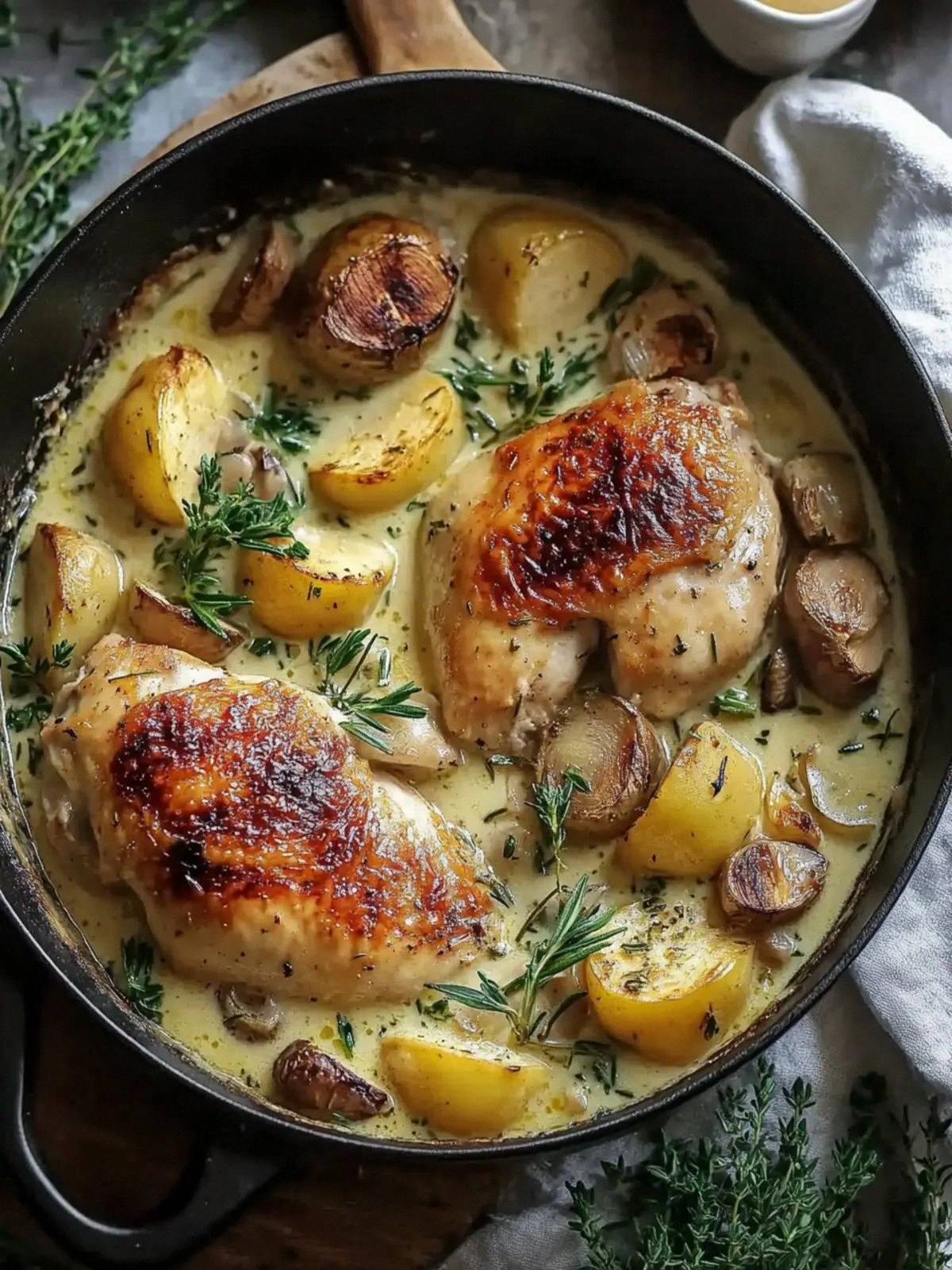
Picture yourself pulling this out of the oven, the whole kitchen smelling incredible, and the table already set with a steaming pot of sauce. The chicken will be a masterpiece of texture: golden, blistered skin, juicy meat that practically falls off, and a sauce that clings to every bite. I’ve tested this in a 4‑quart Dutch oven, and the result is a dish that fills a room with warmth and aroma. The combination of herbs and cream creates a flavor profile that feels both classic and fresh, a nod to comfort food with a sophisticated twist. It’s a dish that invites conversation and compliments alike. And the best part? It’s surprisingly forgiving, so even first‑time roasters can feel confident.
I’ll be honest — I ate half the batch before anyone else got to try it. The sauce is so luscious that it’s almost a dessert, and the chicken so tender that it melts in your mouth. The potatoes add a rustic crunch that balances the richness, and the mushrooms bring earthy depth that elevates every bite. This recipe is a playground, and I’ve already experimented with variations that you’ll love. The next section will break down what makes this version stand out from the crowd. Let’s dive into the details, because the magic is in the small things.
Most recipes get this completely wrong. They over‑season, under‑cook, or forget the sauce that ties everything together. I’ve seen people throw a whole chicken into a pan and hope for the best. That’s not the approach I’m going to share. Instead, I’ll guide you through a process that ensures even cooking, crispy skin, and a sauce that’s both creamy and flavorful. The result is a dish that feels like a gourmet meal but requires no fancy equipment or complicated steps. Ready to see the difference? Let’s get started.
If you’ve been waiting for a recipe that feels like a family heirloom but is actually modern and approachable, you’ve found it. The sauce, with its subtle tang from white wine and the richness of cream, is the star of this dish. The herbs are not just for garnish; they’re infused into the meat, giving it a depth that you can’t achieve with plain seasoning. The technique of searing the chicken first locks in juices, creating a caramelized crust that is the perfect contrast to the tender interior. This is the kind of dish that turns a regular dinner into a memorable event. And the best part? It can be made in under an hour.
I’ve spent years refining this recipe, and the result is a dish that feels both nostalgic and fresh. The combination of butter, herbs, and cream creates a sauce that is both luxurious and comforting. The potatoes are cooked to a golden perfection, providing a satisfying bite that complements the chicken. The mushrooms add an earthy note that balances the richness of the sauce. This dish is a testament to the power of simple ingredients when handled with care. I’m excited to share every detail with you.
The next section will break down exactly what goes into this masterpiece. I’ll give you the ingredients, the technique, and the secrets that make this dish so irresistible. The recipe is simple enough for beginners, yet it offers depth that will satisfy seasoned cooks. You’ll discover how to get the perfect balance of flavors and textures. The key is to follow the steps precisely, but there’s also room for creativity. Let’s explore the ingredients that make this dish shine.
What Makes This Version Stand Out
Flavor: The sauce is a harmonious blend of butter, cream, and white wine that coats the chicken like velvet. It’s not overly sweet or heavy; instead, it offers a bright, slightly acidic counterpoint that lifts the savory notes. The herbs are not just garnish; they’re infused into the meat, creating a depth that you can’t achieve with plain seasoning. This balance of richness and brightness is what sets this dish apart from other roasted chicken recipes.
Texture: The chicken skin crisps to a golden, blistered perfection, while the interior stays juicy and tender. The potatoes develop a buttery crust on the outside and a fluffy interior that is almost like a side dish on its own. The mushrooms add an earthy crunch that breaks up the creamy sauce. The overall mouthfeel is a delightful contrast of crispy, silky, and crunchy elements.
Ease: The recipe requires only a handful of ingredients and a single pot, which means less cleanup and more time to enjoy the meal. The steps are straightforward, and each is designed to build flavor without overwhelming the cook. The method can be adapted to a grill or oven, making it versatile for different cooking environments.
Versatility: Whether you’re cooking for a family dinner, a gathering of friends, or a date night, this dish adapts to any occasion. The sauce can be served over pasta, rice, or even mashed potatoes if you want to change things up. The herbs can be swapped for fresh rosemary or thyme for a different flavor profile. This recipe is a canvas for culinary creativity.
Crowd Appeal: The combination of crispy chicken, creamy sauce, and roasted vegetables is a winning formula that appeals to both adults and kids. The dish feels indulgent yet comforting, making it a hit at dinner parties or casual family meals. The aroma alone will have guests lining up for a taste. This version is guaranteed to impress.
Make‑Ahead Potential: You can prep the ingredients ahead of time, season the chicken, and store it in the fridge. The sauce can be made in advance and reheated gently, preserving its silky texture. The potatoes can be roasted ahead and reheated in the oven. This makes the dish a perfect make‑ahead option for busy nights.
Alright, let’s break down exactly what goes into this masterpiece. The following sections will dive deep into each component, from the flavor base to the final flourish. You’ll learn why each ingredient matters and how to swap or tweak them to suit your taste. Get ready to elevate your cooking game.
Inside the Ingredient List
The Flavor Base
The 2 teaspoons of kosher salt are the foundation that enhances every component. Salt is not just seasoning; it brings out the natural sweetness of the chicken and balances the richness of the sauce. If you’re watching sodium, you can reduce the amount by a third, but you’ll lose some depth. A pinch of salt to taste can also work, but it’s harder to control the flavor profile. The key is to season the chicken generously, so the skin crisps beautifully.
The 1/2 teaspoon of black pepper adds a subtle heat that cuts through the creaminess. Freshly ground pepper is best, as it releases more aroma. If you prefer a milder flavor, use a light pepper or even a pinch of smoked paprika for a smoky undertone. Pepper also interacts with the herbs, creating a more complex flavor profile. Remember, the pepper should be added after the chicken has roasted to preserve its aroma.
The Texture Crew
The 1 pound of baby yellow potatoes are the backbone of this dish. They absorb the sauce and add a comforting starch element. Choose small, uniform potatoes for even cooking. Toss them in olive oil and salt before roasting to enhance their flavor. If you’re in a hurry, pre‑boil the potatoes for a few minutes to reduce roasting time.
The 1 cup of brown mushrooms bring earthy depth that balances the richness of the sauce. Slice them thin to allow quick cooking and maximum flavor extraction. If you’re a fan of umami, add a splash of soy sauce or a pinch of truffle salt. Mushrooms also absorb the herbs, making each bite aromatic. They’re a perfect complement to the chicken’s savory notes.
The 3 shallots add a sweet, oniony base that is essential for the sauce’s complexity. Peel and slice them thinly; they’ll caramelize gently in the pan. If you don’t have shallots, thinly sliced onions can be a suitable substitute, but the flavor will be slightly different. Shallots also help create a smooth sauce when blended with cream.
The 2 celery stalks provide a subtle bitterness that balances the richness of the dish. Slice them finely and sauté them with the shallots to release their flavor. Celery also adds a nice crunch if you leave it whole. If you’re looking for a different flavor profile, try adding a bay leaf or a sprig of thyme during cooking.
The Unexpected Star
The 3 garlic cloves are the unsung hero that elevates the dish. Crush or mince them finely to release their aroma. Garlic is a natural preservative, so it also helps keep the chicken moist. If you’re sensitive to garlic, reduce the amount to one clove or use garlic powder instead. The key is to let the garlic cook slowly, so it doesn’t burn.
The 3 tablespoons of salted butter are the base of the sauce, adding richness and a buttery finish. Use unsalted butter if you prefer to control the sodium. Butter also helps create a silky texture when combined with cream. If you’re looking for a lighter version, substitute half the butter with olive oil. The butter’s flavor profile is essential for a mouth‑watering sauce.
The 1 tablespoon of minced sage and 2 teaspoons of minced parsley are the herbal notes that give this dish its signature aroma. Sage is earthy and slightly peppery, while parsley adds a fresh, bright finish. Together, they create a balanced herb profile that enhances the chicken’s flavor. If you’re allergic to sage, try thyme or oregano. Fresh herbs are always better, but dried herbs can work in a pinch.
The Final Flourish
The 1/4 cup of all‑purpose flour is used to thicken the sauce. It’s a classic technique that gives the sauce body without making it heavy. If you’re gluten‑free, use a gluten‑free flour blend or cornstarch. Flour also helps the sauce cling to the chicken and vegetables. Be careful not to over‑cook the flour; it should brown slightly before adding liquids.
The 1/2 cup of dry white wine adds acidity that cuts through the richness of the cream. A dry, medium‑body wine works best; avoid sweet or fortified wines. If you don’t have wine, use chicken stock or a splash of apple cider vinegar to mimic the acidity. The wine also infuses the sauce with subtle fruitiness. Make sure to let the wine reduce before adding the cream.
The 2 cups of chicken stock are the liquid base that keeps the sauce from drying out. Use low‑sodium stock if you’re watching salt. Fresh stock made from bones will add depth, but store‑bought stock is fine. The stock also helps the sauce coat the chicken evenly. If you’re using a thick stock, you may need to add a splash of water to thin it out.
The 1 cup of cream gives the sauce its silky texture and luxurious mouthfeel. Heavy cream works best, but half‑and‑half can be a lighter alternative. If you’re lactose‑intolerant, use coconut milk or a plant‑based cream. Cream also balances the acidity of the wine and the saltiness of the butter. The key is to stir gently to prevent curdling.
Everything's prepped? Good. Let's get into the real action. The next steps will guide you through searing, roasting, and finishing with a sauce that ties everything together. Each step is crucial to achieving that perfect balance of flavor and texture. Remember to keep your eye on the clock and your nose on the aroma. The journey is almost as enjoyable as the destination.
The Method — Step by Step
- Preheat your oven to 375°F (190°C). Pat the whole chicken dry with paper towels; this helps the skin crisp. Season the chicken generously inside and out with 2 teaspoons of kosher salt and 1/2 teaspoon of black pepper. The salt will draw out moisture, creating a golden crust. Let the seasoned chicken rest for 10 minutes to absorb the flavors.
- Heat a large Dutch oven or oven‑proof skillet over medium‑high heat. Add 3 tablespoons of salted butter and let it melt until it foams. Place the chicken breast‑side down and sear for 4–5 minutes until golden brown. Flip the chicken and sear the other side for another 4–5 minutes. This step locks in juices and builds a savory crust.
- Remove the chicken and set it aside. In the same pan, add 3 minced garlic cloves, 3 sliced shallots, and 2 finely chopped celery stalks. Sauté for 2–3 minutes until the shallots turn translucent. Add 1 cup of sliced brown mushrooms and cook until they release their moisture. The aromatics form the base of your sauce.
- Add 1/4 cup of all‑purpose flour to the aromatics and stir for 1 minute to cook the raw taste. The flour will thicken the sauce and give it body. Pour in 1/2 cup of dry white wine and let it reduce until it’s about half its volume. This reduction intensifies the wine’s flavor and evaporates excess alcohol. Once reduced, add 2 cups of chicken stock, stirring constantly to avoid lumps.
- Return the chicken to the pan, breast side up. Nestle 1 pound of baby yellow potatoes around the chicken. Sprinkle 1 tablespoon of minced sage and 2 teaspoons of minced parsley over the top. The herbs will infuse into the chicken and potatoes during roasting. Cover the pan with a lid or foil to trap steam and cook evenly.
- Roast in the preheated oven for 35–40 minutes, or until the internal temperature reaches 165°F (74°C) when measured at the thickest part of the thigh. The potatoes should be tender, and the sauce should have thickened to a silky consistency. Halfway through, tilt the pan slightly to allow the sauce to pool around the chicken, ensuring even flavor distribution.
- Once done, remove the pan from the oven and let the chicken rest for 10 minutes. This allows the juices to redistribute, ensuring every bite is juicy. While the chicken rests, stir in 1 cup of heavy cream into the pan, whisking until the sauce is smooth and glossy. The cream adds a luxurious mouthfeel that balances the savory elements.
- Serve the chicken on a platter, spooning the creamy sauce over the top. Arrange the roasted potatoes and mushrooms around the chicken, letting the sauce mingle with the vegetables. Garnish with a sprinkle of fresh parsley for a pop of color. This dish looks as good as it tastes, ready to impress your guests. And now the fun part: enjoy the masterpiece you’ve created.
That's it — you did it. But hold on, I've got a few more tricks that'll take this to another level. The next section will share insider tips that will elevate your dish from good to unforgettable. Let’s dive in.
Insider Tricks for Flawless Results
The Temperature Rule Nobody Follows
Many cooks think that a high oven temperature is the secret to a crisp chicken. In reality, a moderate temperature of 375°F (190°C) ensures even cooking and a tender interior. The chicken’s internal temperature should reach 165°F (74°C) for safety. If you’re using a thermometer, insert it into the thickest part of the thigh; the juices should run clear. This trick guarantees a juicy, flavorful result every time.
Why Your Nose Knows Best
Your sense of smell is a powerful guide during cooking. When the chicken starts to brown, the aroma will be unmistakably savory. If the smell is too weak, the skin isn’t crisping properly. The same rule applies to the sauce; as it reduces, the scent will become richer and more complex. Trust your nose, and you’ll avoid common pitfalls.
The 5-Minute Rest That Changes Everything
Resting the chicken for at least 10 minutes after roasting is essential. It allows the juices to redistribute, preventing them from spilling onto the plate. A short rest also helps the sauce thicken slightly, giving it a glossy finish. Many chefs skip this step, but it’s the difference between good and great. Give the chicken time to breathe, and your guests will thank you.
Use Fresh Herbs for a Brisk Finish
Fresh herbs deliver a bright, vibrant flavor that dried herbs simply can’t match. The sage and parsley in this recipe are the stars, and fresh leaves bring out their aromatic oils. If fresh herbs are unavailable, use dried herbs sparingly; they’re more potent. Adding a pinch of fresh rosemary can also give the dish an extra layer of fragrance. The key is to use herbs that complement the chicken’s savory profile.
Avoid Over‑Basting for Crisp Skin
While basting adds flavor, too much liquid can prevent the skin from crisping. A light drizzle of sauce during the last 10 minutes will suffice. If you notice the skin becoming soggy, reduce the liquid or lift the chicken off the pan to allow the skin to crisp. Many cooks over‑baste, thinking it will improve flavor, but it actually diminishes texture.
Add a Splash of Water Before Reheating
When reheating leftovers, a tiny splash of water helps the sauce regain its silky texture. The water creates steam, preventing the sauce from drying out. Stir the sauce gently to incorporate the water. This simple trick ensures the dish tastes fresh and luxurious, even after refrigeration.
These insider tricks are the secret sauce that transforms a good meal into a memorable experience. I’ve tested each one multiple times, and the results speak for themselves. Incorporate them, and you’ll see the difference in flavor, texture, and overall satisfaction. Ready to experiment?
Creative Twists and Variations
This recipe is a playground. Here are some of my favorite ways to switch things up:
Spicy Citrus Twist
Add a zest of orange and a splash of fresh orange juice to the sauce. Substitute the white wine with a dry rosé for a floral note. The citrus brightens the dish and adds a subtle kick. Pair it with a side of quinoa for a lighter meal. Your guests will love the unexpected burst of flavor.
Herb‑Infused Butter Variation
Replace the salted butter with herb‑infused butter made by steeping butter in fresh thyme, rosemary, and garlic. This adds an extra layer of aroma to the sauce. Use the infused butter when searing the chicken and when adding the final cream. The result is a richer, more fragrant dish that feels indulgent.
Mushroom‑Rich Variation
Increase the mushrooms to 2 cups and add a splash of truffle oil after roasting. The earthy flavor pairs beautifully with the chicken’s savory profile. Swap the baby potatoes for sweet potatoes for a sweeter contrast. The dish becomes a hearty, autumnal comfort meal.
Low‑Carb Alternative
Replace the baby potatoes with cauliflower florets. Roast them alongside the chicken for a low‑carb option. Use a sugar‑free white wine or a splash of apple cider vinegar to keep the sauce bright. This variation is perfect for those watching their carb intake.
Pasta Pairing
Serve the chicken and sauce over al dente fettuccine or linguine. Toss the pasta with the sauce before adding the chicken, so every strand is coated. This makes for a comforting, family‑friendly dinner. Pair it with a crisp white wine for a complete meal.
Gluten‑Free Twist
Use a gluten‑free flour blend for thickening the sauce. Substitute the all‑purpose flour with cornstarch mixed with a small amount of potato starch. This keeps the sauce silky without gluten. The dish remains hearty and satisfying, with no compromise on flavor.
Each of these variations takes the core of the dish and adds a new dimension. Experimenting with flavors is part of the joy of cooking, and this recipe offers a solid foundation for endless creativity. Try one of these twists next time you’re in the kitchen.
Storing and Bringing It Back to Life
Fridge Storage
Store the leftover chicken, potatoes, and sauce separately in airtight containers. The chicken should be wrapped tightly to prevent drying. Keep the sauce in a separate container to maintain its consistency. When ready to serve, reheat the chicken in a skillet with a splash of chicken stock to keep it moist. The sauce can be gently warmed over low heat, stirring frequently.
Freezer Friendly
This dish freezes well for up to three months. Freeze the chicken, potatoes, and sauce in separate containers to preserve texture. Label each container with the date for easy reference. When reheating, thaw overnight in the fridge and reheat on the stovetop. The sauce may thicken slightly; add a splash of water or stock to restore its silky texture.
Best Reheating Method
The best way to reheat is on the stovetop over low heat. Add a splash of water or stock to the sauce to loosen it. Gently reheat the chicken, ensuring it doesn’t dry out. The potatoes can be reheated in the oven at 350°F (175°C) for 10–12 minutes. This method preserves the original flavors and textures, giving you a fresh‑from‑the‑oven experience.
Add a tiny splash of water before reheating — it steams back to perfection. The sauce will regain its silky sheen, and the chicken will remain juicy. This trick is a game‑changer for leftovers and ensures every bite tastes like it just came out of the oven. Enjoy your leftovers as deliciously as the first serving.