Picture this: a cramped kitchen, a ticking timer, and a craving that refuses to be ignored. I was halfway through a chaotic dinner prep when the phone buzzed with a frantic text from my sister—“I need a quick, impressive dish for the office potluck, and I only have shrimp.” I stared at the fridge, saw the shrimp glistening, and thought, “Why not a shrimp omelette?” That simple spark turned into a culinary obsession. I spent the next two hours experimenting, tweaking, and tasting until I reached a version that felt like a secret weapon in any kitchen.
The first bite was a revelation: the shrimp was plump and sweet, the eggs silky yet firm, and the green onion added a bright, almost citrusy pop. The soy sauce and sesame oil danced together, coating everything like a velvet ribbon that made the dish feel indulgent yet still light. The moment the omelette hit the plate, the aroma filled the room—warm, savory, and unmistakably Chinese. I couldn’t resist sharing this triumph, and I’ve been telling anyone who will listen that this is hands down the best version you’ll ever make at home.
If you’ve ever tried a shrimp omelette and felt it was missing something—maybe too dry, or the shrimp not popping—then you’re in for a game-changer. This recipe is not just a tweak; it’s a full-blown reimagining that balances flavor, texture, and speed. I dare you to taste this and not go back for seconds. The result will have you pulling the dish out of the pan, the whole kitchen smelling incredible, and the guests asking for the recipe before the first bite even leaves their plates.
So grab your skillet, prep your shrimp, and let’s walk through every single step. By the end, you’ll wonder how you ever made it any other way. Trust me, you’re about to become the unofficial shrimp omelette champion in your circle.
What Makes This Version Stand Out
- Taste: The marriage of soy sauce, sesame oil, and shrimp creates a savory, slightly sweet profile that’s instantly satisfying. The green onion adds a fresh, peppery bite that cuts through the richness.
- Texture: The omelette’s edges are crisp yet the center remains tender and fluffy, providing a contrast that feels like a culinary win.
- Speed: You can have a full, restaurant-quality dish ready in under ten minutes—perfect for those “I need something fast” moments.
- Simplicity: Only six ingredients, no fancy gadgets, just a skillet and a whisk.
- Ingredient Quality: Using jumbo shrimp and fresh green onions elevates the dish from ordinary to extraordinary.
- Make‑Ahead Potential: The omelette can be cooked ahead, stored, and reheated without losing its crispness.
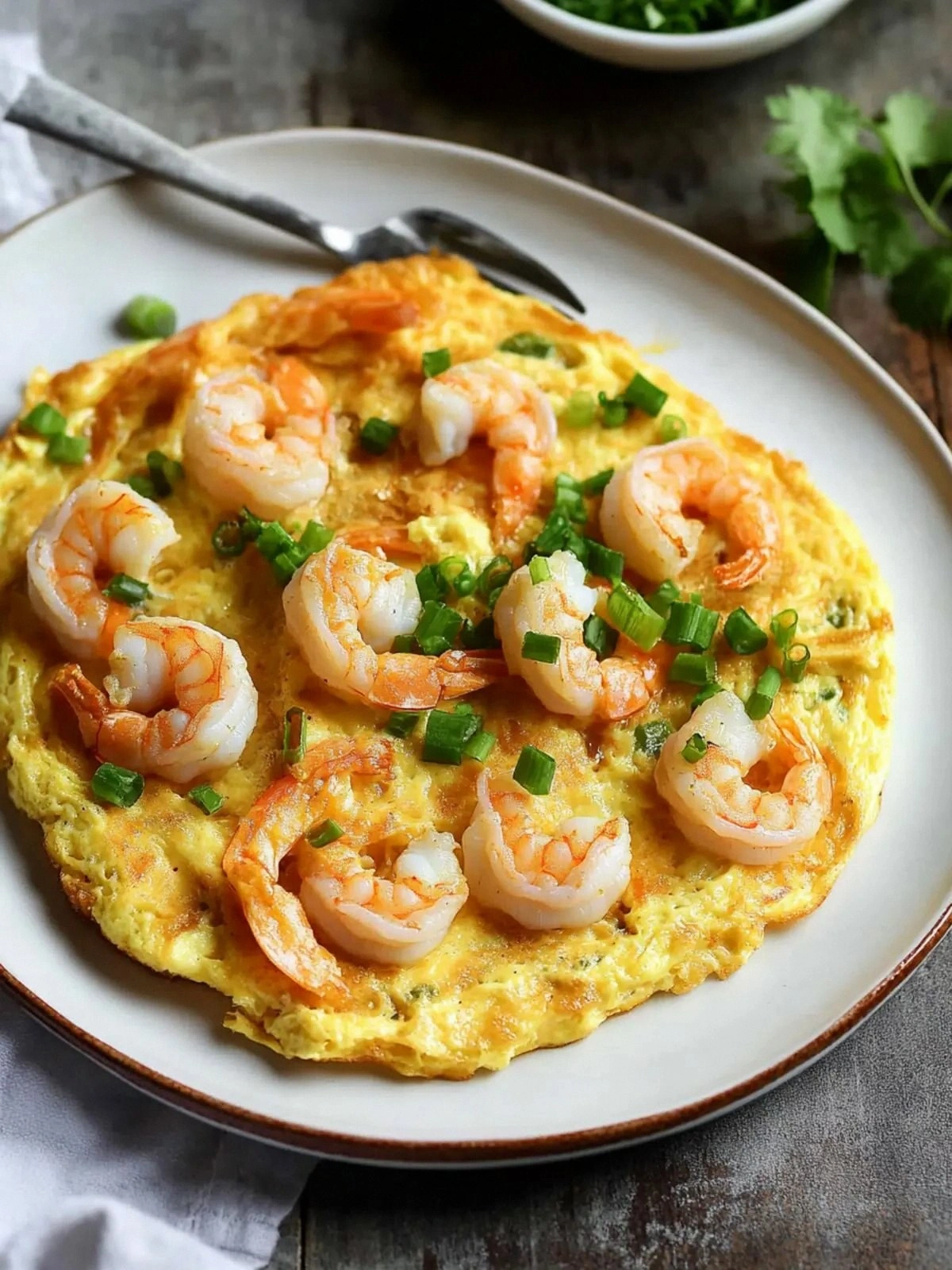
- Presentation: A golden, glossy finish that looks as good as it tastes.
- Versatility: Works as a hearty breakfast, a quick lunch, or a crowd‑pleasing appetizer.
Inside the Ingredient List
The Flavor Base
The 2 teaspoons of regular soy sauce are the backbone of this dish. They provide umami depth that’s essential for a Chinese-inspired flavor profile. Skip the soy sauce, and you’ll end up with a bland, almost pancake‑like omelette. If you’re watching sodium, look for a low‑sodium version, but remember that the saltiness balances the sweetness of the shrimp.
The 1 teaspoon of sesame oil is the secret that gives the dish a nutty aroma and a glossy sheen. It’s a small amount, but it’s mighty. If you’re allergic to sesame, a drop of toasted almond oil can mimic the flavor, though it will change the aroma slightly. For a smoky twist, try a few drops of liquid smoke in place of the sesame oil—just be careful not to overpower the shrimp.
The Texture Crew
The 6 large eggs are the foundation. They bring body and a delicate custard-like center. Whisk the eggs until the whites and yolks are fully blended, but avoid over‑whisking, as that can make the omelette rubbery. The 1 tablespoon of vegetable oil is added to the pan for a crisp exterior; using a non‑stick skillet can reduce the oil amount but will affect the crunch.
The 1 cup of jumbo shrimp is the star of the show. They’re large enough to hold their shape but small enough to cook quickly. If you prefer a milder flavor, use peeled and deveined shrimp. For a more adventurous bite, leave the shells on; just be sure to remove them before serving.
The Unexpected Star
The ¼ cup of green onion is the unexpected star that brightens the dish. The green parts bring a fresh, slightly peppery flavor, while the white parts add mild sweetness. If you can’t find fresh green onions, finely diced scallions or even a splash of fresh lime juice can provide a similar brightness. The green onion also adds a pop of color that makes the dish look as good as it tastes.
The Final Flourish
The final flourish is the careful timing of when to add the shrimp to the pan. Adding the shrimp too early can cause it to overcook and become rubbery, while adding it too late can leave the shrimp under‑seasoned. The trick is to add the shrimp after the eggs have set slightly but are still slightly runny on top, allowing the shrimp to absorb the flavors without losing texture.
Everything’s prepped? Good. Let’s get into the real action.
The Method — Step by Step
- Prep the Shrimp: Rinse the shrimp under cold water, pat dry, and season lightly with a pinch of salt. I’ve found that a quick rinse removes the briny taste and lets the shrimp’s natural sweetness shine. Let them sit while you whisk the eggs.
- Whisk the Eggs: In a medium bowl, beat the eggs with a fork until the whites and yolks are fully blended. The texture should be slightly frothy but not airy. This creates a tender, silky base that holds the shrimp together.
- Heat the Pan: Place a non‑stick skillet over medium heat and add the tablespoon of vegetable oil. The oil should shimmer but not smoke. This step ensures a crisp exterior without a greasy finish.
- Pour in the Eggs: Once the oil is hot, pour the whisked eggs into the pan. Let them sit for about 10–15 seconds before stirring. This creates a slight crust that will hold the shrimp in place.
- Add the Shrimp: Sprinkle the shrimp evenly over the eggs. As the shrimp starts to cook, the edges will begin to turn pink. The shrimp should be added when the eggs are still slightly runny on top; this keeps them from overcooking.
- Season: Drizzle the soy sauce and sesame oil over the shrimp and eggs. Use a spatula to gently fold the mixture, ensuring the shrimp is coated. The sauce should coat the shrimp like velvet, giving a glossy finish.
- Add the Green Onion: Sprinkle the chopped green onion over the top. The green onion adds a fresh, peppery contrast that brightens the dish. Stir gently to distribute the green onion without breaking the shrimp.
- Cook to Perfection: Let the omelette cook for another 2–3 minutes, or until the edges lift from the pan and the center is set but still slightly moist. Flip carefully if you want a double‑sided finish; otherwise, fold the omelette in half for a neat presentation.
- Serve: Slide the omelette onto a plate and cut into wedges. The sizzle when it hits the pan? Absolute perfection. Serve immediately, or cover loosely with foil if you’re waiting for guests.
That’s it — you did it. But hold on, I’ve got a few more tricks that will take this to another level.
Insider Tricks for Flawless Results
The Temperature Rule Nobody Follows
Many people think medium heat is fine, but the secret lies in medium‑high heat. The high temperature ensures a quick sear, locking in moisture and creating a golden crust. If the heat is too low, the omelette will steam instead of crisp, and the shrimp will release too much water.
Why Your Nose Knows Best
When the eggs begin to set, you’ll notice a toasty aroma. That’s your cue to add the shrimp. The scent tells you the interior temperature is just right—hot enough to cook the shrimp but cool enough to keep the eggs tender.
The 5‑Minute Rest That Changes Everything
Letting the omelette rest for 5 minutes after cooking allows the flavors to meld and the steam to redistribute. This step prevents the shrimp from pulling away from the eggs, keeping each bite cohesive and delicious.
The Right Pan Matters
A cast‑iron skillet retains heat better than a stainless steel pan, ensuring an even cook. If you’re using a non‑stick pan, pre‑heat it for a full minute before adding oil to reduce sticking.
The Perfect Fold
Fold the omelette in half at the last moment to create a neat, bite‑size portion. This not only looks elegant but also helps maintain the structure, preventing the shrimp from sliding off.
Creative Twists and Variations
This recipe is a playground. Here are some of my favorite ways to switch things up:
The Veggie‑Rich Version
Add diced bell pepper, sliced mushrooms, or baby spinach to the omelette for extra color and nutrition. The veggies should be sautéed lightly before adding the shrimp to keep them crisp.
The Spicy Kick
Stir in a teaspoon of chili oil or a pinch of crushed red pepper flakes. The heat balances the sweetness of the shrimp and adds a layer of complexity.
The Thai Twist
Swap the soy sauce for fish sauce and add a splash of lime juice. Finish with fresh cilantro and a drizzle of peanut sauce for an unexpected fusion.
The Breakfast Boost
Serve the omelette with a side of toasted sourdough or a small bowl of miso soup. The combination of umami flavors and the chewy bread creates a comforting morning meal.
The Party Plate
Slice the omelette into bite‑size squares and serve on a platter with toothpicks. Pair with a dipping sauce of soy sauce and a dash of sesame oil for a crowd‑pleasing appetizer.
Storing and Bringing It Back to Life
Fridge Storage
Cool the omelette to room temperature, then wrap tightly in plastic wrap or store in an airtight container. It will keep fresh for up to 2 days. Reheat gently in a skillet over low heat, adding a splash of water to keep it moist.
Freezer Friendly
Slice the omelette before freezing to make reheating easier. Store in a freezer bag or container for up to 1 month. Thaw overnight in the fridge and reheat in a skillet with a splash of water.
Best Reheating Method
The key to a perfect reheated omelette is to steam it lightly. Add a tablespoon of water to the skillet, cover, and heat over low heat for 2–3 minutes. This restores the moisture without overcooking.